Carnegie Mellon advances autonomous metallurgy with self-driving lab
The Materials Innovation Cloud Lab integrates agentic AI and robotics to accelerate alloy discovery for aerospace and industrial applications.
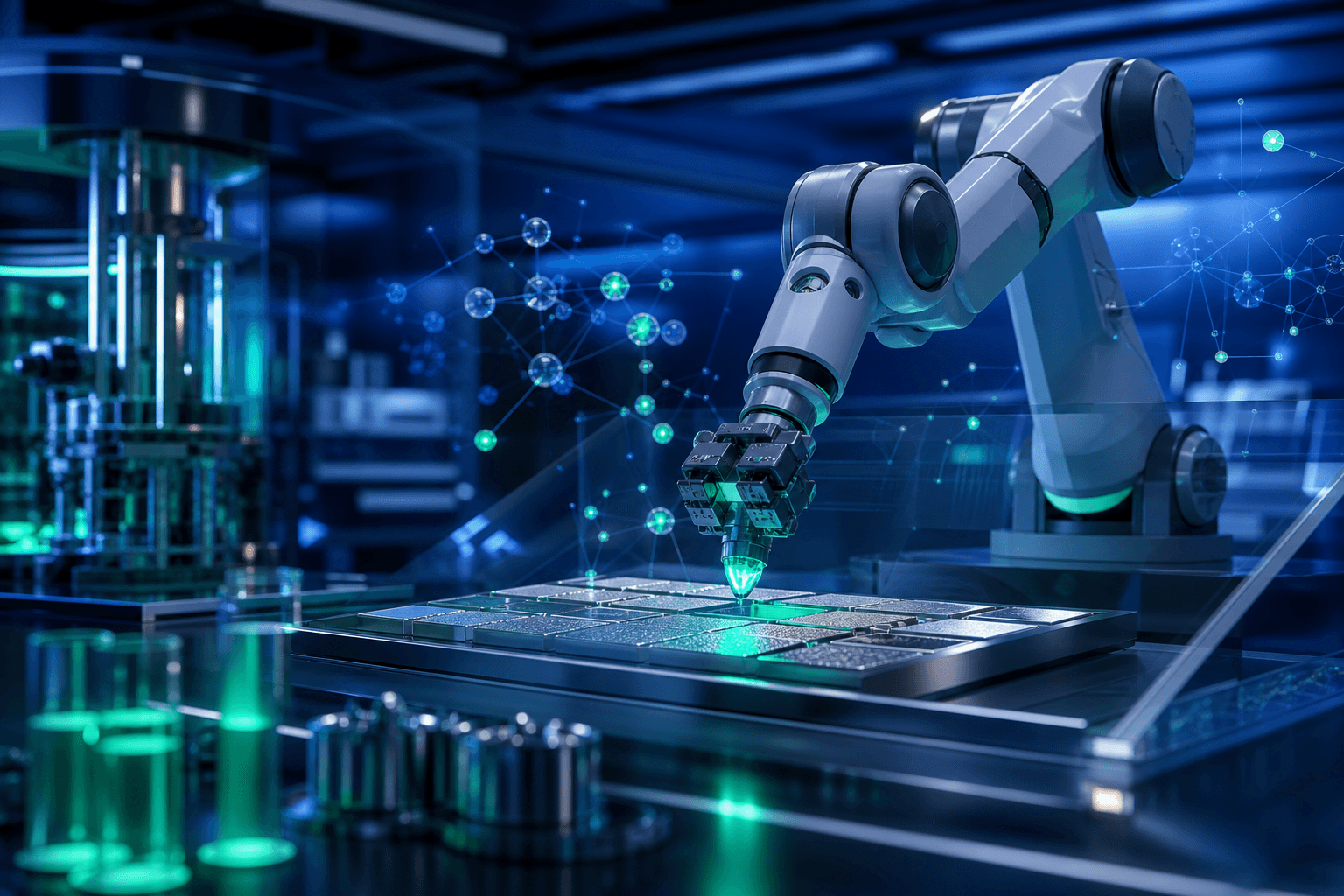
Carnegie Mellon University has launched a self-driving research environment at its Materials Innovation Cloud Lab (MICL) in Pittsburgh, aiming to automate the discovery of next-generation alloys. Located at Mill 19 at Hazelwood Green, the facility functions as a core component of the university’s AI Science Foundry and recently secured a role as a node in the U.S. National Science Foundation’s Programmable Cloud Laboratory (PCL) Testbed.
The laboratory leverages the Manufacturing Futures Institute (MFI) Digital Data Backbone to orchestrate complex workflows between AI models and physical hardware. This infrastructure enables the system to manage material movement, execute experimental sequences, and contextualize research data with minimal human intervention. By integrating computational design with physical fabrication, the lab seeks to bridge the gap between theoretical material science and practical manufacturing.
The facility utilizes specialized hardware, including the Amazemet rePOWDER platform, to facilitate rapid prototyping of custom alloys. This equipment allows researchers to produce metal powders through ultrasonic atomization, addressing a significant bottleneck in additive manufacturing by enabling the creation of small, experimental quantities. The system also supports the recycling of powder, allowing materials to be re-atomized for future research cycles.
Bryan Webler, a professor of materials science and engineering at Carnegie Mellon, emphasizes the necessity of integrating computational discovery with physical scaling.
It’s the combination of all of these steps, the computational discovery, the assessment and the scaling up to make powder and parts, that you need to put together to get a new material for use in practical applications.
The lab is currently prioritizing the automated production of aluminum alloy powders tailored for aerospace applications. These materials are designed to improve performance and sustainability by offering high-strength characteristics at lower costs. The facility is equipped to process a broad spectrum of metals, with melting temperatures spanning from 200°C to 3500°C, providing versatility for various industrial partners.
Mohadeseh Taheri-Mousavi, an assistant professor of materials science and engineering, oversees the AI framework and aluminum alloy design at the metal node. She notes that the integration of intelligent reasoning into the experimental loop fundamentally alters the speed of the design process. As the laboratory continues to generate data, the team expects to develop foundation models that further refine decision-making capabilities within the automated environment.
The shift toward agentic AI in materials science represents a broader transition toward closed-loop research systems. By automating the transition from an initial hypothesis to a testable physical sample, the MICL reduces the temporal and resource costs traditionally associated with metallurgical development. This capability allows for more iterative testing cycles, which are essential for optimizing complex material properties.
The reliance on a centralized digital data backbone highlights the importance of MLOps in physical science domains. By standardizing how data flows from robotic sensors to machine learning models, the facility ensures that experimental results are immediately actionable. This architecture allows the AI to learn from both successful experiments and failures, incrementally improving the efficiency of the alloy discovery process.
The inclusion of the MICL in the NSF’s PCL Testbed underscores the national interest in creating a network of AI-enabled laboratories. This initiative aims to standardize the protocols for cloud-based research, potentially allowing for broader collaboration between academic institutions and industrial sectors. The lab serves as a sandbox for testing both the hardware and software components required for the next generation of autonomous manufacturing.
Future developments at the facility will likely focus on expanding the library of materials and refining the predictive capabilities of the underlying AI models. As the system matures, the ability to rapidly iterate on alloy compositions could lead to significant advancements in the durability and environmental impact of components used in aerospace, energy, and infrastructure sectors.