Caterpillar and CoreWeave accelerate physical AI training cycles for construction
Caterpillar and CoreWeave are optimizing computational pipelines to enable autonomous construction equipment to adapt to unstructured, real-world environments.
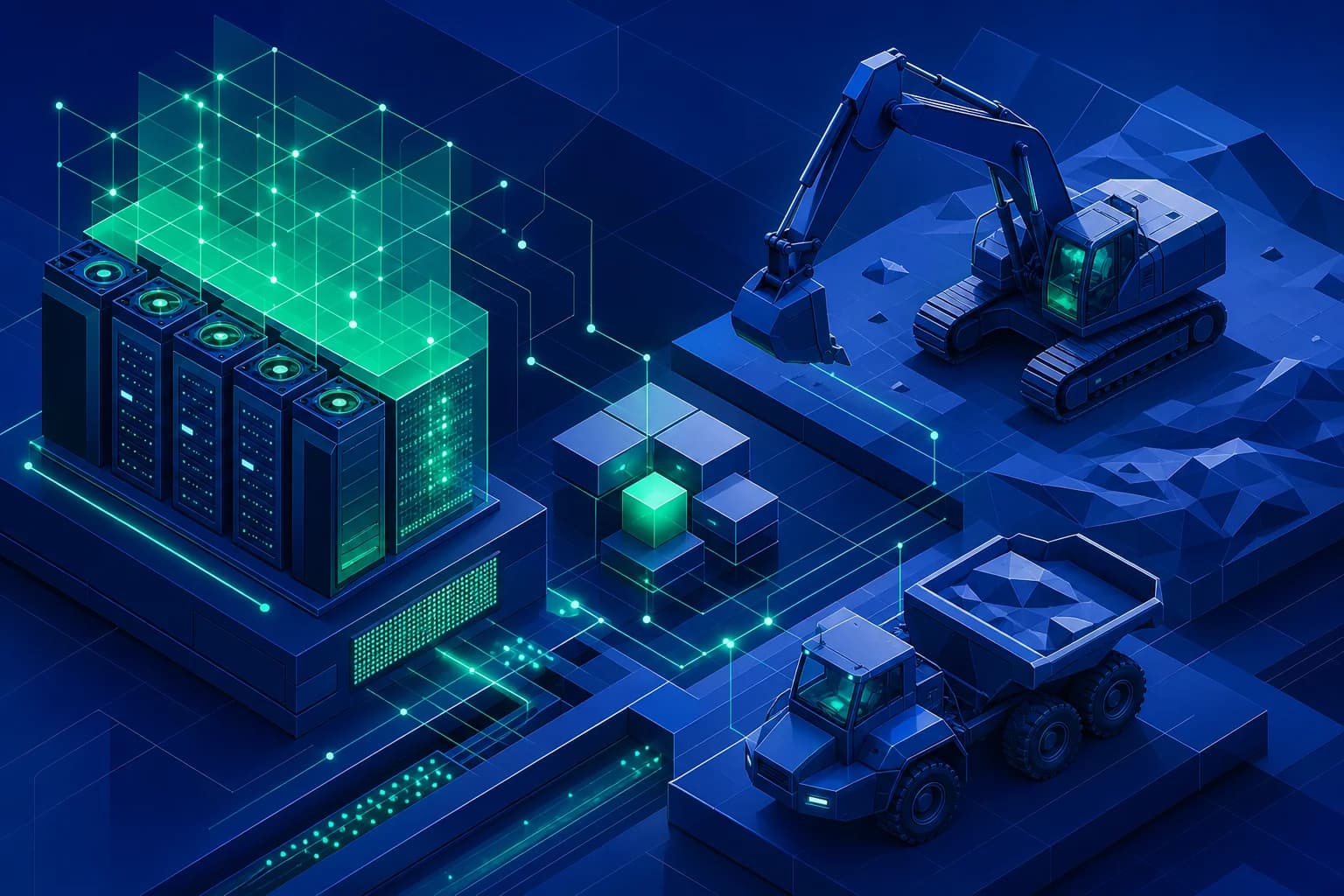
Caterpillar Inc. and CoreWeave Inc. are re-engineering the computational pipelines required to train autonomous construction equipment, aiming to bridge the gap between static mining automation and the unpredictable nature of active job sites. The initiative focuses on shortening the iteration cycles for reinforcement learning models that must interpret and respond to highly variable physical environments.
Brandon Hootman, vice president of physical AI platforms and construction autonomy at Caterpillar, noted that the industry faces a fundamental shift in data requirements when moving from controlled mining sites to dynamic construction zones. While mining environments remain relatively stable once established, construction sites present a constant flux of terrain, obstacles, and operational variables that demand more adaptive machine perception.
The technical challenge involves synchronizing massive streams of heterogeneous data, including LiDAR point clouds, high-resolution camera feeds, and sub-second machine telemetry. Caterpillar currently maintains a federated data ecosystem containing approximately 18 petabytes of information, yet Hootman emphasized that this volume represents only a fraction of what is necessary to train robust models for real-world construction tasks.
CoreWeave has responded to these demands by deploying a specialized Physical AI Field Engineering service designed to integrate cloud infrastructure directly with customer domain expertise. Richard Ahlfeld, senior vice president of physical AI at CoreWeave, stated that the shift toward physical AI necessitates a fundamental redesign of data center storage and processing architectures to handle the unique throughput requirements of autonomous systems.
Training an autonomous excavator involves simulating millions of digging scenarios while layering reinforcement learning algorithms over historical performance data. By utilizing graphics processing unit capacity provided by CoreWeave, Caterpillar has successfully integrated Nvidia-powered models to automate the annotation and labeling of incoming field data.
This automated pipeline has significantly reduced the time required to move from data ingestion to model training. Hootman reported that processes previously spanning months are now completed in a matter of hours, allowing engineers to close the feedback loop within a single workday.
The infrastructure underlying this collaboration highlights the growing necessity for specialized cloud services that cater to the specific needs of physical AI. Unlike foundation model training, which often relies on massive static datasets, autonomous machinery requires a continuous, high-fidelity stream of perception data that must be processed and fed back into simulation environments in near real-time.
The reliance on high-performance computing for physical AI signifies a broader trend where industrial autonomy is increasingly tethered to the efficiency of the underlying MLOps stack. As Caterpillar continues to refine its autonomous fleet, the ability to rapidly iterate on perception models will likely determine the viability of scaling these systems across diverse, unstructured environments.
The shift toward agentic inference at scale requires not just raw compute, but a sophisticated orchestration layer that can manage the lifecycle of these models from the field to the simulation lab. By embedding engineers directly with domain experts, CoreWeave ensures that the infrastructure is tuned to the specific latency and throughput constraints inherent in heavy machinery operations.
This technical alignment addresses the bottleneck of manual data labeling, which has historically hindered the development of robust perception systems for construction. Automating the annotation process allows for a more rapid deployment of updated weights to the field, ensuring that machines can adapt to changing site conditions without requiring extensive downtime for manual model retraining.
Future milestones for the partnership will likely center on the scalability of these training pipelines as more machines are integrated into the federated network. The focus remains on maintaining model accuracy while increasing the frequency of simulation updates to reflect the latest field performance data.
The integration of these advanced computational resources suggests a future where autonomous construction sites operate with a level of precision previously reserved for highly controlled industrial settings. Continued investment in these specialized AI platforms will be essential for overcoming the persistent productivity challenges currently facing the global construction industry.