Tesla Robotics Alumni Pivot to Specialized Industrial Automation
Former Tesla Optimus engineers are launching specialized robotics startups to address immediate industrial needs, moving away from general-purpose humanoid development.
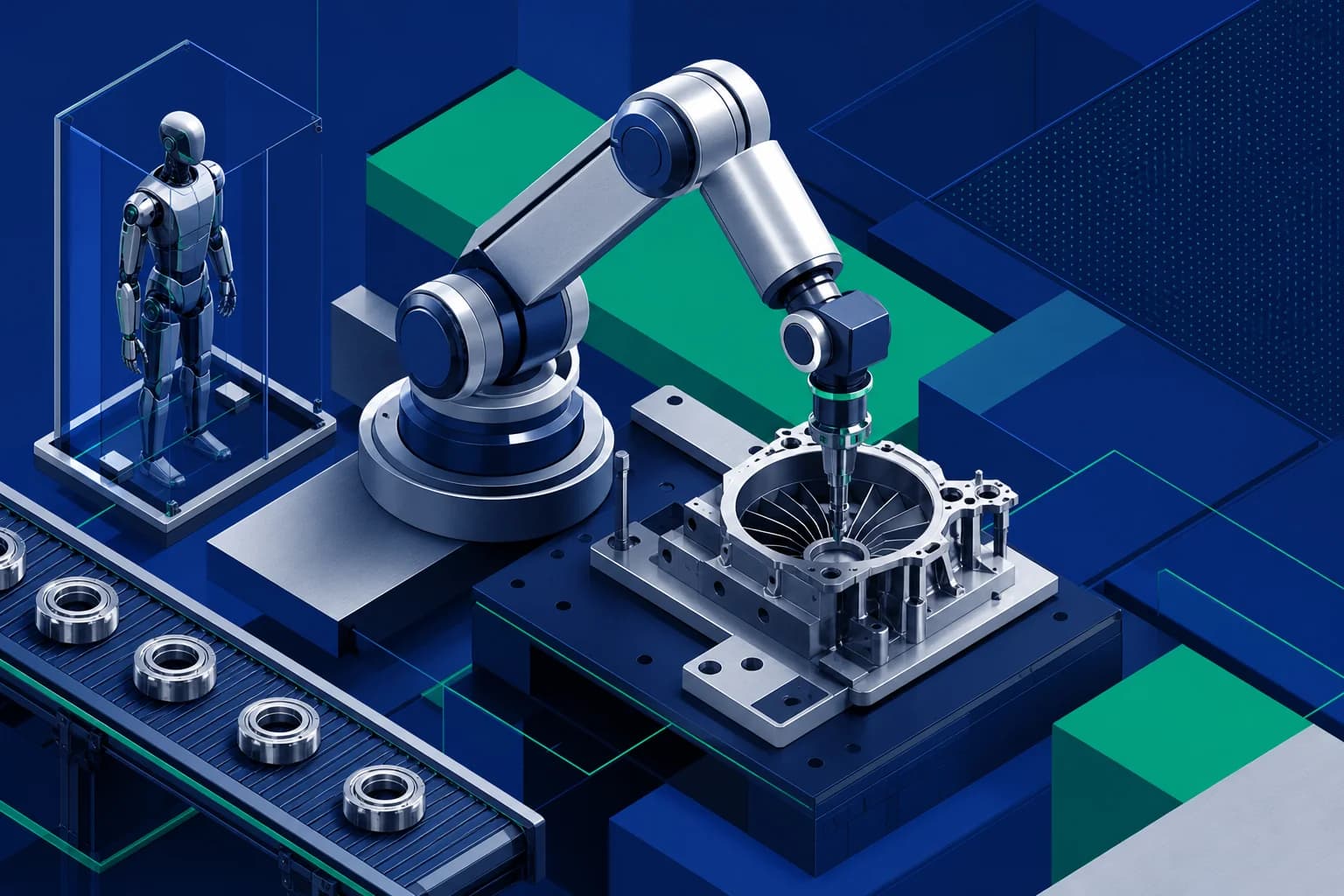
Ashish Kumar, the former lead of the artificial intelligence team behind the Tesla Optimus project, has co-founded a new San Francisco-based venture titled Intelligent Machines. The startup aims to deploy specialized industrial robots tailored for high-precision manufacturing and aerospace applications, signaling a strategic departure from the general-purpose humanoid development model.
Reports from The Information indicate that Kumar has successfully recruited several engineers formerly associated with the Optimus program to staff the new entity. This transition represents the latest in a series of high-profile departures from Tesla’s robotics division, which currently operates under intense pressure to scale production while addressing fundamental AI generalization hurdles.
Kumar previously earned a Ph.D. in artificial intelligence from UC Berkeley in 2023 before joining Tesla to spearhead the Optimus AI initiative. His tenure at the company was defined by a transition from classical control stacks to reinforcement learning, a method that allowed the team to scale dexterity by training models directly on video data.
The shift toward task-specific hardware reflects a broader industry realization that general-purpose humanoids face significant deployment friction in real-world environments. While Tesla continues to ramp production at its Fremont facility—reportedly reaching several hundred units per week—the company remains constrained by hardware bottlenecks and software limitations that prevent the robots from performing useful work at scale.
Engineers at the firm have struggled to overcome the finicky nature of robotic hands and the difficulty of generalizing tasks beyond narrow training environments. These technical constraints often force teams to invent custom solutions in-house, as off-the-shelf components frequently fail to meet the rigorous performance requirements of high-speed manufacturing lines.
Other Tesla alumni have adopted similar entrepreneurial strategies to address these market gaps. Chris Walti, who previously led early Optimus development, founded Mytra to build warehouse automation systems capable of handling heavy payloads that standard autonomous mobile robots cannot support. Mytra has secured more than $78 million in funding to address these specific logistical challenges.
Jay Li, the former head of electronics for the Optimus program, founded Proception to manufacture dexterous robotic hands for the research and humanoid developer community. Following a legal settlement with Tesla regarding trade secrets, Li raised $11 million to bring his specialized hardware to market, positioning his firm as a potential future supplier for larger robotics players.
The exodus of talent from Tesla’s robotics program underscores the high market value of engineers who have managed the integration of neural control stacks with physical hardware. Venture capital firms are increasingly backing these spin-off ventures, recognizing that the expertise gained within Tesla’s aggressive development environment is directly applicable to solving narrower, high-value industrial problems.
Intelligent Machines is currently seeking approximately $100 million in funding to support its focus on precision-intensive tasks like aerospace assembly and complex welding. By concentrating on these specialized domains, the startup aims to deliver immediate commercial value without the immense software complexity required for full humanoid autonomy.
The broader trend extends beyond the United States, as evidenced by European efforts like UMA, founded by former Tesla Autopilot and Optimus engineer Rémi Cadène. UMA is currently engaging with dozens of potential customers to deploy its lightweight Northstar robot, demonstrating that the demand for specialized industrial automation is global in scope.
These ventures suggest that the next generation of factory robotics will be heavily influenced by the technical lessons learned during the development of the Optimus platform. While the ultimate promise of general-purpose humanoids remains a long-term goal for Tesla, the immediate future of the sector appears to lie in the application of narrow, battle-tested intelligence to specific industrial tasks.
Investors and industry observers will monitor how these startups manage the transition from research-heavy environments to the rigorous demands of factory-floor deployment. The success of these companies will likely depend on their ability to maintain technical precision while scaling hardware production to meet the needs of diverse manufacturing sectors.