Maruti Suzuki leverages AI simulation to compress vehicle development cycles
The automaker is cutting its development timeline to 36 months by integrating machine learning and virtual testing into its engineering pipeline.
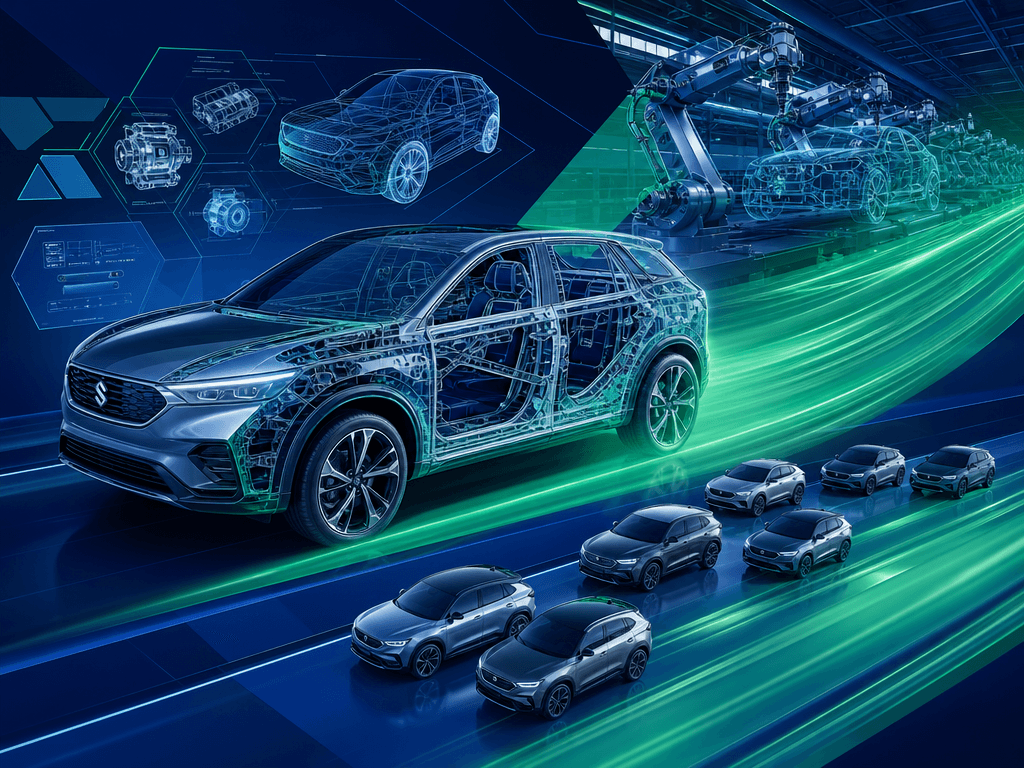
Maruti Suzuki is transitioning its vehicle development cycle from 48 months to 36 months by deploying advanced artificial intelligence and simulation frameworks, according to a report from Complete AI Training. This shift aims to accelerate the introduction of nine new SUV and electric vehicle models scheduled for release over the next three years.
The engineering strategy relies on machine learning models to perform virtual validation of vehicle components before physical prototypes are ever constructed. By identifying design flaws within digital environments, the company minimizes the necessity for multiple physical prototype iterations that historically slowed down the automotive design process.
This reliance on virtual testing allows engineering teams to refine production planning before committing to hardware manufacturing. The reduction in physical prototyping directly lowers material resource consumption during the early stages of product development, allowing for a more sustainable engineering pipeline.
Concurrent engineering practices are also being implemented to synchronize the supply chain with internal design goals. Maruti Suzuki is engaging component developers during the initial design phase rather than waiting for finalized blueprints to be distributed to external vendors.
This parallel workflow ensures that tooling and manufacturing preparation occur simultaneously with vehicle design. Such integration prevents downstream bottlenecks and improves overall operational efficiency across the production lifecycle, as reported by the company’s recent strategic update.
The company is simultaneously pushing for a localization threshold exceeding 80 percent for its upcoming vehicle lineup. Sourcing components domestically reduces production costs and mitigates risks associated with global supply chain volatility, providing the flexibility to scale production faster in response to market demand.
Recent sales figures, which surpassed 1.90 lakh units monthly, provide the necessary capital and market momentum for this localized expansion. These metrics underscore the company’s intent to scale production capacity in response to both domestic and international demand for its next generation of vehicles.
The move toward a 36-month cycle necessitates a fundamental shift in how engineering teams validate complex automotive designs. Product development leaders are now prioritizing virtual simulation as the primary method for ensuring design integrity before production begins, effectively replacing the traditional reliance on physical testing cycles.
Reliance on physical prototypes to detect design flaws is increasingly viewed as an outdated bottleneck in the automotive industry. The adoption of AI-driven simulation tools provides a more scalable approach to meeting modern speed requirements for vehicle launches, ensuring that design errors are caught in the virtual phase where they are cheaper to rectify.
Automotive engineers must now synchronize simulation data with legacy CAD software to ensure that virtual models accurately reflect physical manufacturing constraints. The integration of high-fidelity CAD data into neural network training sets requires significant preprocessing to normalize geometric parameters, ensuring that the AI models can predict structural stresses and thermal performance with high accuracy. This MLOps challenge involves maintaining a unified data lineage between the CAD geometry and the simulation outputs to prevent model drift as design requirements evolve during the iterative development process.
The success of this initiative will likely depend on the precision of the simulation models and the efficacy of early-stage supplier collaboration, which remains a critical component of the company’s operational strategy. Future milestones will focus on the actual performance of these AI-validated designs as they transition from digital simulations to mass-market production lines. Observers will monitor whether this accelerated timeline maintains the company’s established quality and safety standards for its new SUV and electric vehicle offerings as the company attempts to balance speed with engineering rigor.
Automotive manufacturers are shifting toward a model where digital twins and predictive analytics become the standard for product development. As Maruti Suzuki continues to refine its machine learning pipelines, the industry will look to see if these efficiency gains can be replicated across other major manufacturing segments to maintain competitive parity in an increasingly digital-first automotive market.