Scaling Open-Source Model Inference for Production AI Agents
Transitioning from local model experimentation to production-grade agentic workflows requires a shift toward unified inference infrastructure to manage operational complexity.
Deploying open-source models into production environments in 2026 demands a shift from simple containerized execution to resilient, multi-model infrastructure management. While developers often achieve success with individual models on local hardware, scaling these components to support concurrent agentic workflows introduces significant operational overhead that frequently necessitates a dedicated platform team.
The traditional do-it-yourself approach involves manually wiring individual servers for specific tasks like embedding, reranking, and generation using tools such as vLLM, TEI, or SGLang. This method provides maximum control over the stack but forces the engineering team to manage the underlying containerization, health checks, and autoscaling logic for every individual model deployment. The complexity of this manual orchestration often leads to fragile systems that struggle to maintain performance under high traffic loads.
Managed APIs offer a third-party alternative where providers handle the infrastructure, allowing developers to pay based on token usage. While this removes the burden of server management, it introduces dependency on external uptime and potential limitations regarding model customization or data privacy. Organizations must weigh these trade-offs against the total cost of ownership when choosing between hosted services and self-managed infrastructure.
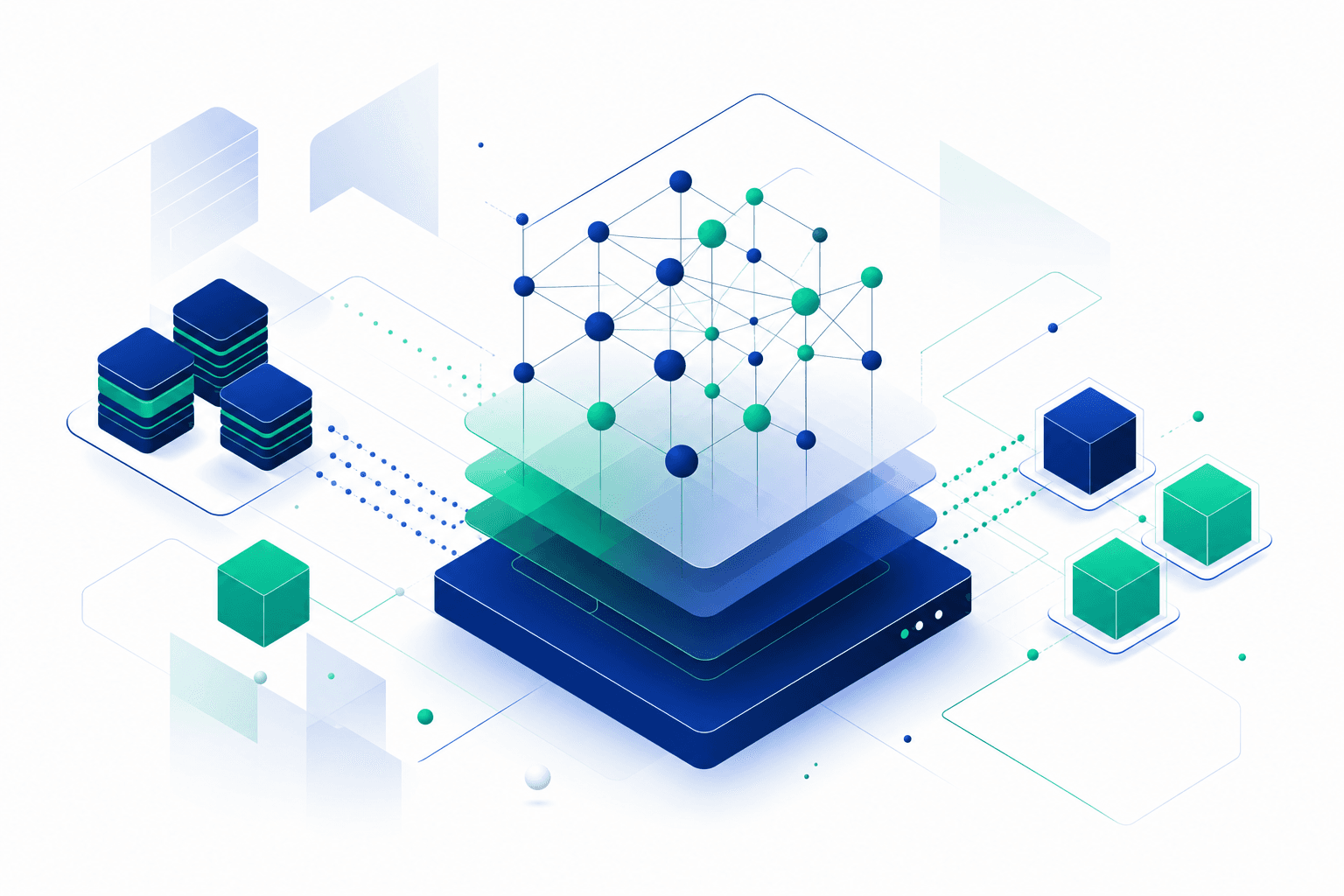
The emergence of multi-model inference servers, such as the Superlinked Inference Engine, represents a middle ground designed specifically for agentic architectures. These systems consolidate the production stack by integrating routing, monitoring, and autoscaling into a unified interface that supports multiple models simultaneously. By abstracting the per-model tuning of batching and attention kernels, these engines allow teams to deploy complex agent loops without requiring extensive infrastructure engineering resources.
Effective memory management remains a critical hurdle when running multiple models on shared GPU resources. Without sophisticated scheduling, concurrent requests for different model weights can lead to memory fragmentation or out-of-memory errors that crash the inference pipeline. Advanced inference engines mitigate this by implementing dynamic memory allocation and request batching that optimizes throughput across heterogeneous model architectures.
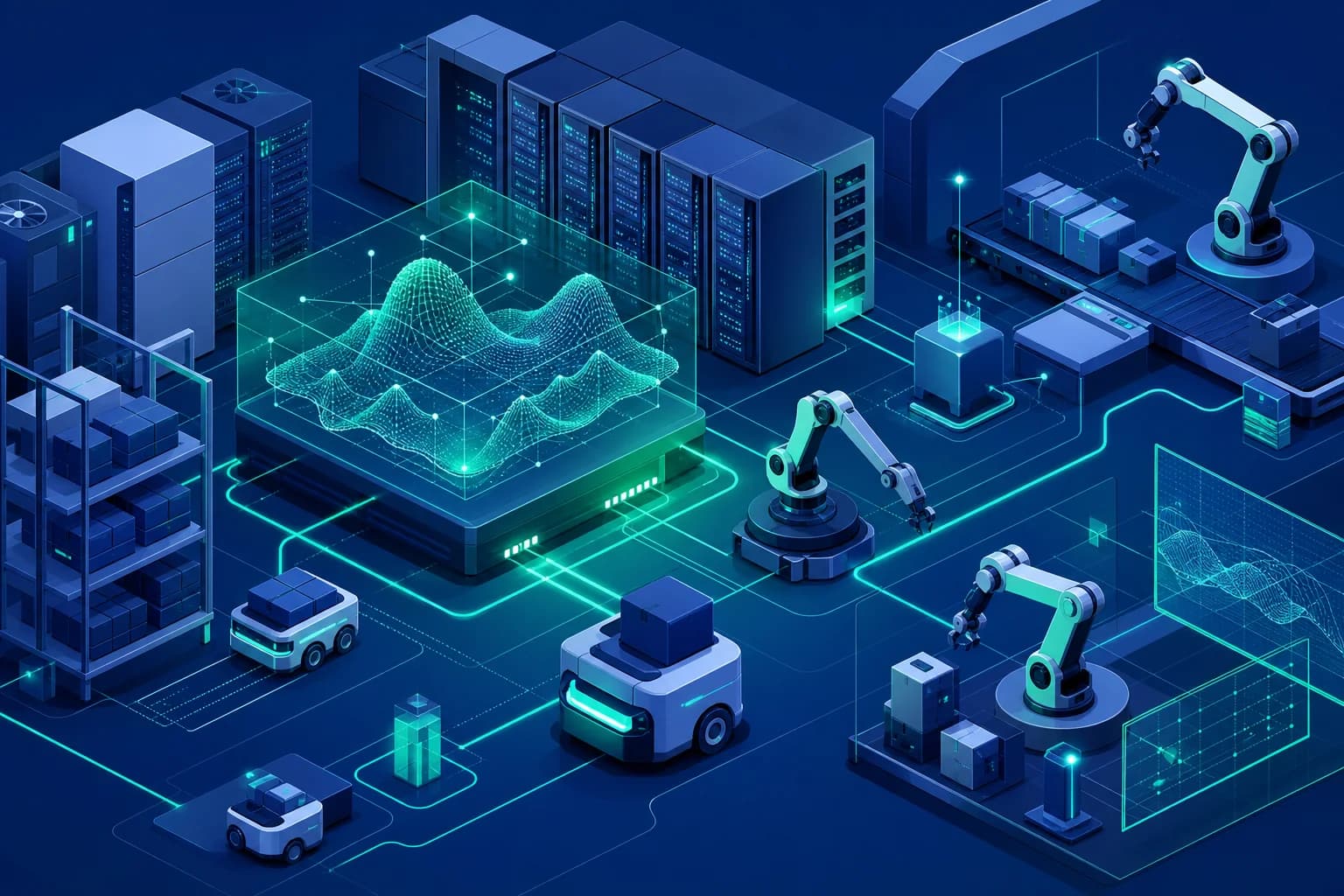
Latency benchmarks for agentic workflows often suffer when models are deployed as isolated services due to network overhead between internal microservices. Consolidating these models onto a single inference engine reduces the inter-service communication latency that typically plagues multi-step agentic reasoning. This architectural consolidation is essential for maintaining the sub-second response times required for real-time user-facing applications.
Production-ready deployments require more than just a functional model; they necessitate comprehensive observability to monitor latency percentiles, throughput, and quality drift. Without automated scaling that allows for zero-capacity states during idle periods, the cost of maintaining idle GPU resources becomes a significant financial burden. Ensuring that the development environment remains identical to the production cluster is essential for maintaining system stability as traffic scales.
The decision to utilize open-source models is increasingly supported by data demonstrating their narrowing performance gap with closed-source alternatives. Research conducted by Frank Nagle of MIT Sloan and Daniel Yue of Georgia Tech indicates that open models frequently achieve 90% of the performance levels seen in proprietary systems shortly after release. This performance parity is further evidenced by the shrinking Arena Elo gap, which dropped to 28.1 points by June 2026, down from 56.3 points in the previous year.
Operational efficiency remains the primary bottleneck for teams attempting to deploy these models at scale. The hidden costs of human labor required to maintain hand-wired infrastructure often exceed the initial savings gained from choosing open-source software. Organizations that prioritize simplified, unified inference stacks are better positioned to manage the ongoing maintenance requirements of production-grade AI agents.
Future deployments will likely focus on reducing the friction between model experimentation and deployment. Watchpoints for the remainder of the year include the maturation of standardized inference protocols and the development of more efficient resource-sharing mechanisms for heterogeneous model fleets. Teams that successfully automate their infrastructure lifecycle will minimize the fragility inherent in complex agentic systems.