Reverse Predictivity Tests Reveal Divergence Between AI and Biological Vision
New research suggests that artificial neural networks often rely on internal strategies that differ significantly from the primate brain, challenging the assumption of biological equivalence.
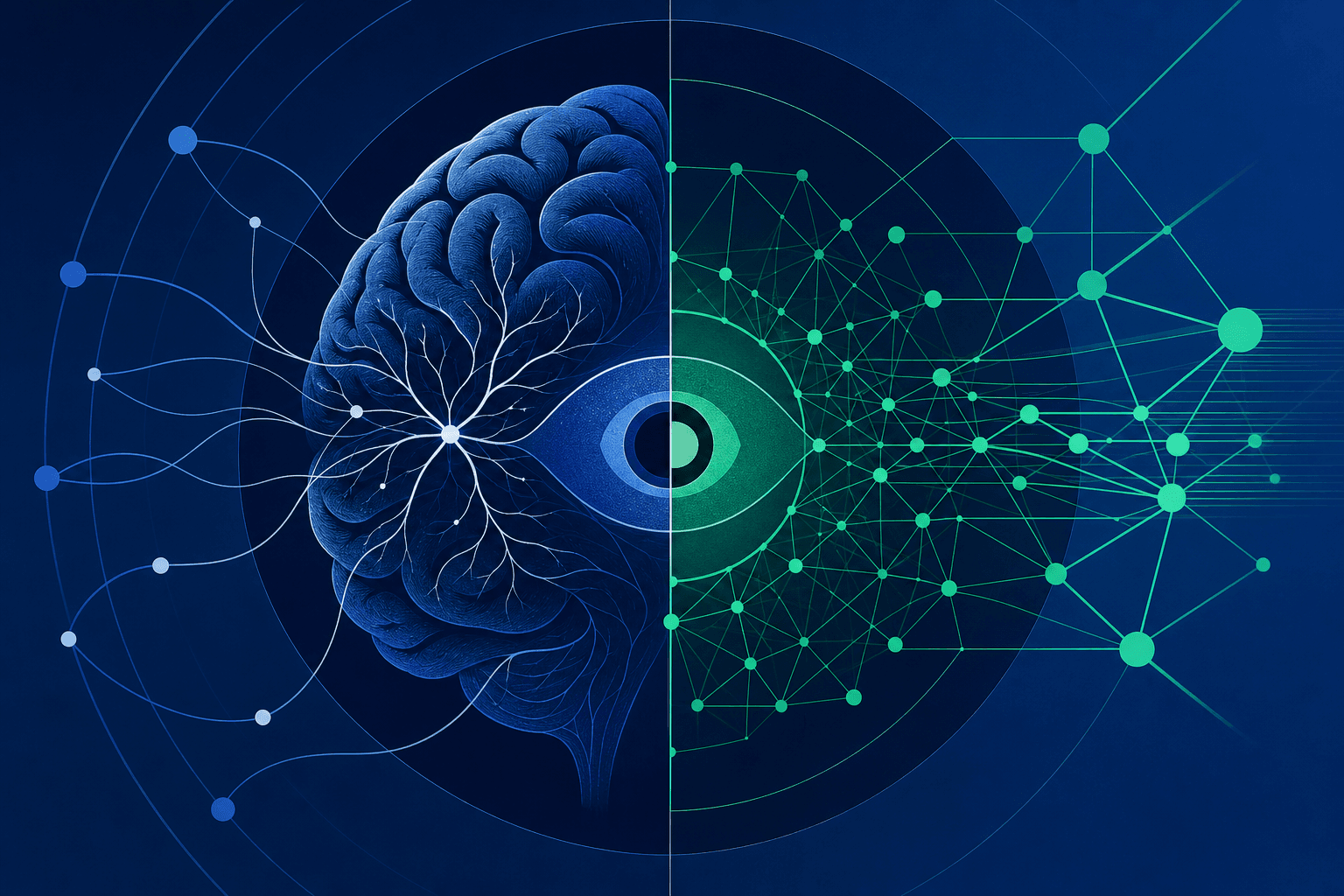
Artificial neural networks have long served as the primary computational proxies for understanding biological vision, yet recent findings suggest this alignment is more superficial than previously assumed. Research published on March 25, 2026, in Nature Machine Intelligence indicates that while these models successfully predict neural activity, they often rely on internal mechanisms that do not mirror the functional architecture of the primate brain.
Kohitij Kar, an assistant professor at York University and senior author of the study, notes that the field has historically evaluated these models through a unidirectional lens. Researchers typically assess whether artificial intelligence can predict brain activity, but they rarely examine whether biological data can reciprocally predict the internal states of the model. This oversight has led to an incomplete understanding of how closely these digital systems actually replicate cognitive processes.
To address this, Kar and his colleague, York University postdoctoral fellow Sabine Muzellec, implemented a reverse predictivity test. The methodology required the models to process a diverse dataset of 1,320 natural and synthetic images, ranging from common objects like zebras and planes to artistic variations and simplified outlines. By comparing the internal responses of the artificial neural networks against recorded biological neural activity, the team sought to identify genuine functional overlaps.
The researchers utilized a rigorous statistical framework to map the high-dimensional internal features of the artificial networks to the recorded neural signals. By testing the models against 300 additional images depicting objects in altered forms, including outlines and drawings, the team ensured that the evaluation covered a broad spectrum of visual complexity. This approach allowed them to isolate which specific layers of the neural networks maintained a consistent relationship with biological data across different visual styles.
The results revealed a significant asymmetry in how information is processed across the two systems. While the models demonstrated a capacity to predict specific neural responses, the inverse was not true; the brain could not reliably predict many of the internal features generated by the artificial networks. This discrepancy suggests that the models frequently arrive at correct visual classifications by utilizing computational shortcuts or strategies that are absent in biological systems.
The study highlights that this divergence is not observed when comparing neurons across different biological brains, which suggests a fundamental architectural mismatch. Kar emphasizes that as artificial neural networks increase in complexity, this gap may widen unless developers prioritize biological alignment in their design processes. The researchers argue that current models may be solving visual tasks through mechanisms that, while effective for classification, do not provide a valid explanation of human visual cognition.
The implications of this research extend to clinical applications where artificial intelligence is increasingly used to model human behavior. Many researchers rely on these systems to study conditions such as autism or post-traumatic stress disorder, operating under the assumption that the models process sensory input in a manner consistent with the human brain. If the underlying logic of the model differs from biological reality, the resulting clinical insights may be based on flawed assumptions about how the brain interprets the world.
Muzellec and Kar have released a diagnostic toolkit designed to help developers evaluate their models for biological consistency. This tool allows engineers to identify which internal components of a network align with neural activity and which do not. By providing a standardized metric for comparison, the authors aim to improve the reliability of models used in neuroscience and behavioral research.
The researchers suggest that better alignment between artificial and biological systems could lead to more biologically consistent models for understanding human perception. Future efforts will focus on applying these diagnostic metrics to other domains, including auditory and language processing, where similar assumptions about brain-like functionality are prevalent. The goal remains to build computational tools that not only perform tasks accurately but also reflect the underlying mechanisms of human intelligence.