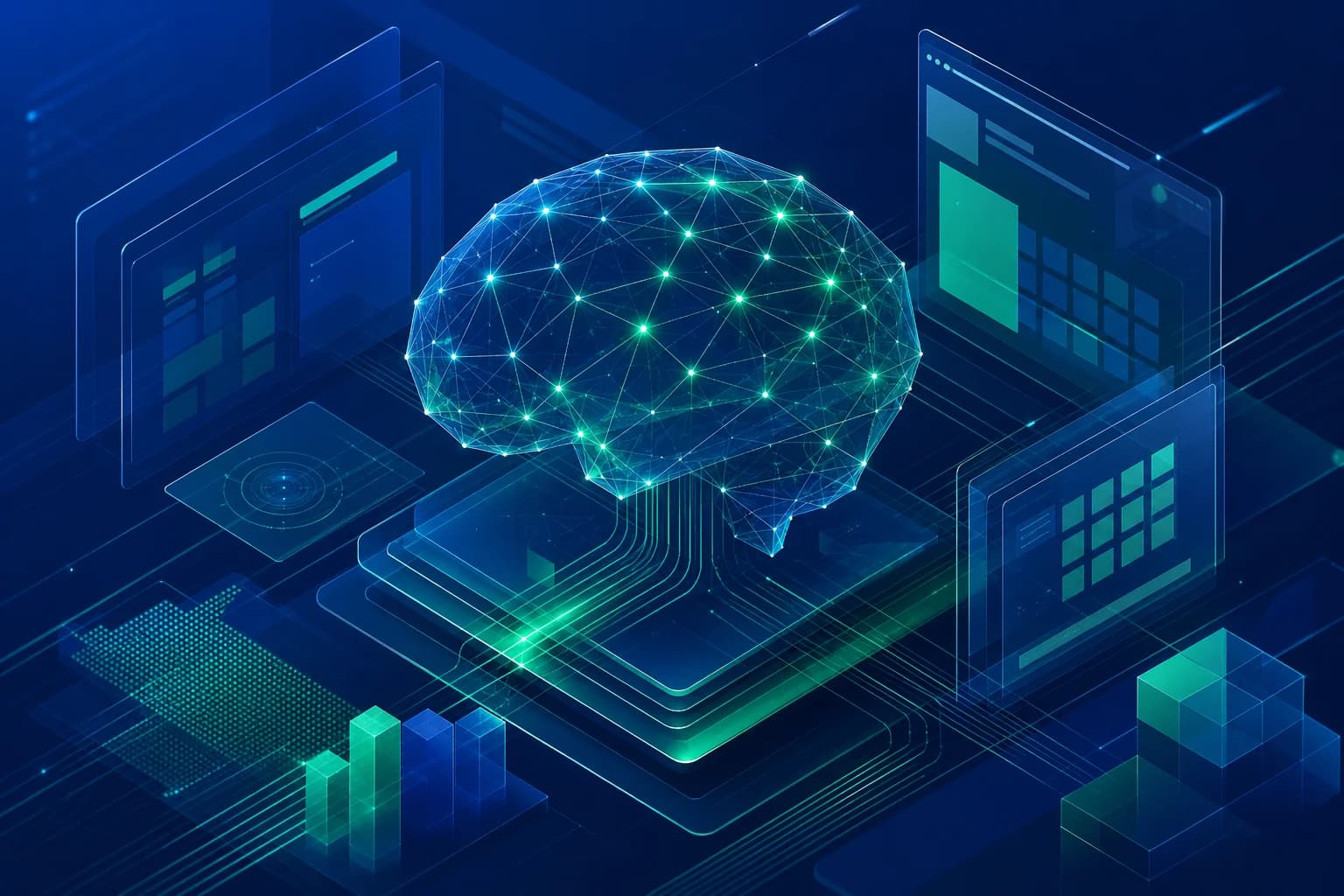
Awiros positions vision AI as the new enterprise operating system
The platform aims to unify fragmented visual workflows into a centralized intelligence layer for physical infrastructure.

The platform aims to unify fragmented visual workflows into a centralized intelligence layer for physical infrastructure.

The aerospace division is integrating computer vision with multi-modal sensor fusion to enable real-time environmental perception on board.

An experimental typography project highlights how current multimodal models struggle to process motion-based visual information, exposing a gap in temporal integration.

The new Touch Surgery Aide platform integrates NVIDIA hardware to enable low-latency computer vision applications within the operating room.

New research suggests that artificial neural networks often rely on internal strategies that differ significantly from the primate brain, challenging the assumption of biological equivalence.

The Ghost Font project highlights a fundamental divergence between human temporal perception and the static frame-based processing of current multimodal AI models.

University of Michigan researchers demonstrate that domain-specific visual foundation models trained on internal clinical archives significantly outperform frontier models in medical imaging.

Researchers have developed a novel adaptive photomemristor architecture that mimics the dynamic range of the human eye, improving vision system performance in complex lighting.

The company is integrating heavy foundation models as a semantic safety net to help delivery robots interpret complex, high-stakes urban environments.

A new architectural framework enables mobile robots to store and retrieve semantic information about their environment using natural language queries.
Applied machine learning, filed daily.
Model releases, silicon, clinical deployment, and the policy shaping them. No digest padding.