Shoolini University Integrates NVIDIA Blackwell Systems for BioAI Research
The new laboratory combines high-performance computing with bioinformatics to accelerate cancer research and molecular modeling.
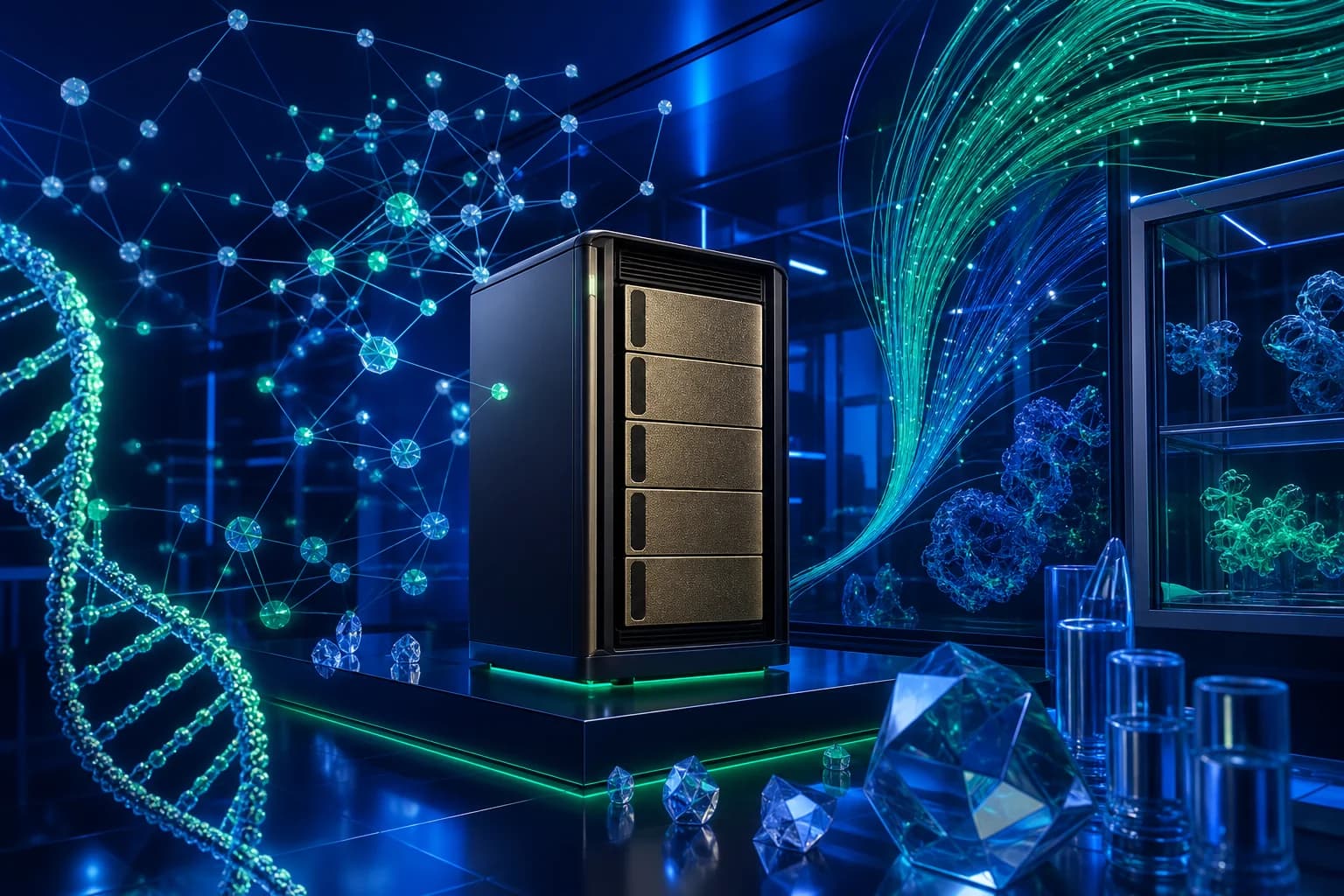
Shoolini University has officially launched its BioAI and Advanced Bioinformatics Lab in Solan, marking a strategic shift toward hardware-accelerated biological research. The facility integrates high-performance computing infrastructure with specialized bioinformatics workflows to address complex challenges in oncology and molecular modeling.
The laboratory deployment features NVIDIA GPU Blackwell systems, providing the necessary compute density for training large-scale biological models. This hardware foundation supports researchers in executing computationally intensive tasks that were previously constrained by limited local processing power. The lab also incorporates high-end iMac systems, creating a dual-environment setup for both model development and data visualization.
Dr. Anthony Callanan and Dr. Rhiannon Grant from the University of Edinburgh presided over the inauguration, signaling an international collaborative intent for the research hub. Their involvement underscores the growing necessity for global academic partnerships in the field of data-driven biotechnology. The facility aims to standardize the use of machine learning across the university’s existing academic programs in bio-engineering and food technology.
Vice Chancellor Prof. Atul Khosla emphasized that the integration of computational intelligence is no longer optional in modern scientific inquiry. He noted that the laboratory serves as a training ground for students to acquire essential skills in AI-assisted biological prediction. The curriculum is designed to bridge the gap between traditional wet-lab biology and the requirements of modern data science.
Prof. Dinesh Kumar, Dean of the Faculty of Applied Sciences and Biotechnology, stated that the shift toward data-driven biotechnology necessitates a deep understanding of computational methods. He explained that future professionals must be proficient in both biological theory and the algorithmic frameworks that govern modern drug discovery. This pedagogical shift is intended to prepare graduates for a professional field where AI is a primary tool for hypothesis generation.
Prof. Pankaj Kumar Chauhan noted that the new laboratory would complement the university’s existing academic programmes and research ecosystem. The School of Bio-engineering and Food Technology offers B.Tech and M.Tech programmes in Bioinformatics, PhD programmes and biotechnology courses, enabling students to develop expertise spanning biological and computational sciences. This integration ensures that students are exposed to the practical application of AI models within a controlled research environment.
Prof. Lokender Kumar, coordinator of the new lab, highlighted the importance of merging biological domain knowledge with computational intelligence. He stated that the facility is specifically configured to handle large-scale biological datasets, molecular interaction studies, and genomic analysis. This focus on interdisciplinary collaboration is expected to streamline the development of innovative approaches to complex biomedical problems.
The technical infrastructure is designed to facilitate advanced research in molecular simulations and AI-assisted biological prediction. By providing a dedicated space for bioinformaticians and AI scientists to collaborate, the university aims to accelerate the pace of research in cancer biology and drug discovery. The facility serves as a central node for researchers to develop and test models that require significant GPU resources.
The reliance on NVIDIA Blackwell architecture suggests a focus on high-throughput processing, which is critical for modern genomics and protein folding studies. This hardware choice allows the research team to move beyond standard bioinformatics tools toward more complex machine learning architectures. The ability to perform rapid simulations is expected to lower the barrier for researchers attempting to model complex biological interactions.
The integration of these systems allows for the processing of massive datasets that were previously unmanageable on standard workstations. By utilizing the parallel processing capabilities of the Blackwell architecture, researchers can iterate on AI models at a significantly higher frequency. This technical capability is essential for identifying patterns in genomic data that correlate with specific cancer markers.
The long-term success of the facility will likely depend on the university’s ability to maintain its high-performance computing resources and foster interdisciplinary research teams. Future milestones include the expansion of its B.Tech and M.Tech programs in bioinformatics to include more rigorous machine learning components. The lab remains a critical watchpoint for observing how regional universities adapt to the hardware-intensive demands of modern AI research.