Medtronic Deploys NVIDIA-Powered Edge Compute for Real-Time Surgical AI
The new Touch Surgery Aide platform integrates NVIDIA hardware to enable low-latency computer vision applications within the operating room.
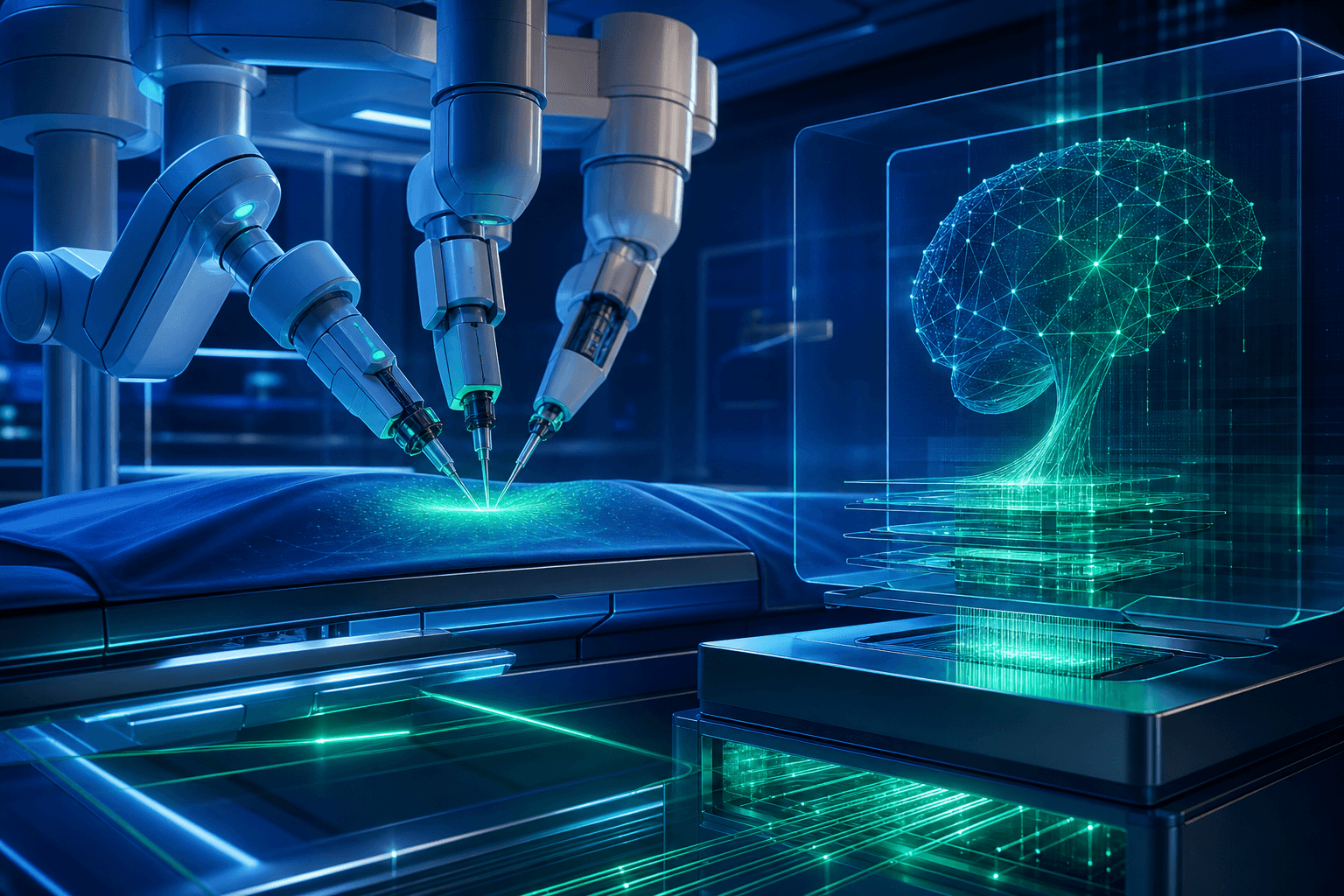
Medtronic is introducing a specialized compute platform designed to bring low-latency artificial intelligence directly into the surgical theater. Known as Touch Surgery Aide, the system functions as an AI-native infrastructure layer intended to support real-time decision-making during complex robotic procedures.
The platform architecture relies on NVIDIA accelerated computing, specifically integrating Holoscan, CUDA, and TensorRT frameworks. By utilizing these tools, the system performs real-time inference on high-bandwidth surgical video feeds to provide immediate context to the operating team. This deployment marks a shift toward localized, high-performance computing requirements for medical robotics.
The first application running on this platform is the Instrument Exit Point (IEP) tool, which recently received clearance from the U.S. Food and Drug Administration. The IEP application uses computer vision algorithms to monitor instrument positioning relative to the surgeon’s field of view. It triggers visual notifications when instruments move outside the designated operational area, assisting in the maintenance of spatial awareness during procedures performed with the Hugo robotic-assisted surgery system.
Processing surgical data in real time requires significant computational overhead, necessitating the use of parallel processing pipelines. The Touch Surgery Aide platform is designed to handle multiple concurrent AI applications, allowing for simultaneous data processing and inference. This capability is intended to move beyond static, post-operative analysis toward dynamic, intra-operative assistance.
Medtronic plans to showcase the platform at the Society of Robotic Surgery 2026 Annual Meeting in Florida. The company intends to expand the utility of the platform from its current focus on robotic-assisted urologic surgery into broader laparoscopic applications. This roadmap suggests a long-term strategy of integrating AI-driven insights into diverse surgical workflows.
The platform architecture leverages NVIDIA Holoscan to manage the streaming data requirements of modern operating rooms. By utilizing a modular software stack, the system can ingest raw video data, perform pre-processing, and execute inference models without significant jitter. This capability is critical for maintaining the high frame rates necessary for accurate computer vision tasks in a live clinical setting, with the hardware designed to support sub-millisecond latency for critical data path operations.
Jim Peichel, chief technology officer at Medtronic, described the shift in how surgical teams interact with digital tools.
Real-time AI is a fundamental evolution in how surgery is supported, moving from technology that assists the surgeon’s hand to technology that helps teams work smarter, move faster, and improve instrument tracking accuracy during the procedure.
The integration of advanced compute platforms into the operating room addresses the latency constraints that have historically limited the deployment of real-time computer vision in clinical environments. By moving inference closer to the data source, the system minimizes the delays associated with cloud-based processing. This architecture is essential for applications where millisecond-level feedback is required to ensure patient safety and procedural accuracy.
The broader implications for surgical MLOps involve the standardization of data collection and model deployment in highly regulated environments. As Medtronic scales the Touch Surgery ecosystem, the ability to iterate on models and deploy them across a global fleet of robotic systems will become a primary technical challenge. The current focus on computer vision and multimodal AI represents the initial phase of a larger effort to digitize the surgical experience, facilitating a more data-centric approach to clinical outcomes.
The future performance of the platform will depend on its ability to maintain high inference accuracy across varying surgical conditions and equipment configurations. Continued development will likely focus on increasing the complexity of the AI models running on the edge hardware while maintaining the strict safety protocols required for medical devices. The industry will monitor the adoption rates of the Hugo system and the subsequent integration of additional AI-driven applications as benchmarks for this technological transition.