Airbus UpNext evaluates edge-AI architectures for autonomous aircraft landing
The aerospace division is integrating computer vision with multi-modal sensor fusion to enable real-time environmental perception on board.
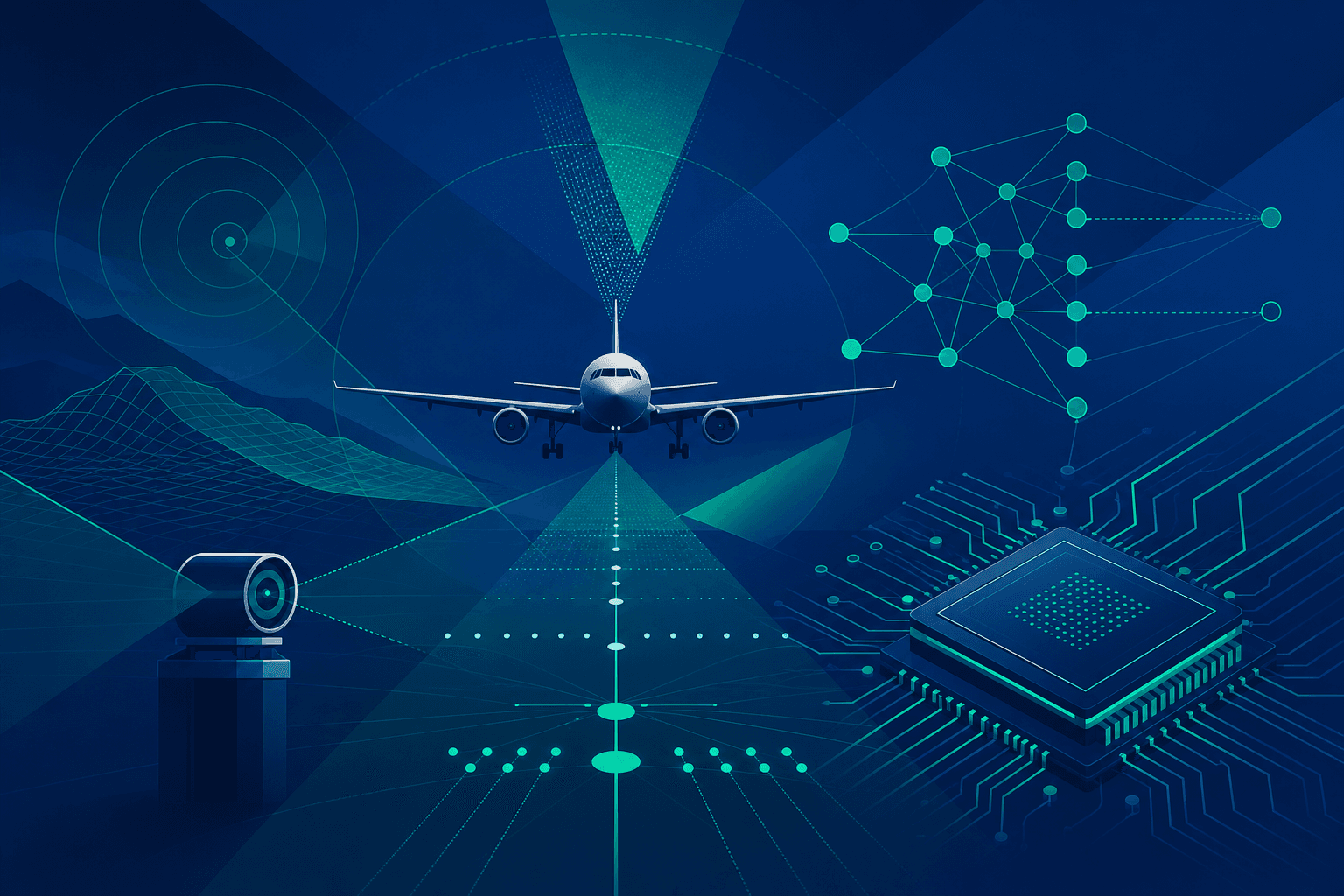
Airbus UpNext is currently developing an edge-AI system designed to facilitate autonomous aircraft landings by processing sensor data directly on the flight deck. This initiative leverages advanced computer vision algorithms to interpret real-time inputs from onboard cameras, lidar sensors, and satellite positioning systems without relying on external ground-based assistance.
The technical framework centers on the integration of high-fidelity imaging with localized processing units to minimize latency in decision-making. By moving the computational burden to the edge, the system aims to provide a reliable perception layer that functions independently of traditional instrument landing systems. This approach addresses the critical requirement for low-latency inference in safety-critical aviation environments where network connectivity cannot be guaranteed.
James Wormald, an R&D leader at Airbus, has emphasized the strategic importance of this development for future flight operations. The project utilizes a sensor fusion architecture that combines visual data with spatial measurements to map the landing environment with high precision. Such a configuration allows the aircraft to identify runways and obstacles while maintaining situational awareness in varying weather conditions.
The underlying machine learning models are trained to handle complex visual inputs, including variable lighting and atmospheric interference. Engineers are focused on optimizing these models for embedded hardware to ensure the system remains performant under the strict power and thermal constraints of an aircraft. This focus on hardware-aware model optimization is a cornerstone of the current testing phase at Airbus UpNext.
Data scientists involved in the project are prioritizing the robustness of the perception pipeline against sensor noise and potential hardware failures. The system must maintain a high degree of confidence in its environmental model to satisfy stringent aviation safety standards. This necessitates a rigorous validation process that includes extensive simulation and flight testing to verify the accuracy of the autonomous landing maneuvers.
The shift toward autonomous perception represents a broader trend in aerospace engineering to reduce pilot workload during high-stress flight phases. By automating the landing sequence, the technology aims to enhance safety margins and operational consistency across different airport infrastructures. The reliance on onboard processing ensures that the aircraft remains autonomous even in scenarios where global navigation satellite systems might be degraded or unavailable.
The significance of this research lies in its potential to redefine the relationship between flight control systems and environmental data. Current flight management systems often rely on pre-programmed flight paths and ground-based beacons to guide an aircraft to the runway. Moving to an edge-AI model allows for dynamic, real-time adjustments based on the actual visual state of the landing environment, rather than static coordinates.
The broader implications for the aviation industry involve a transition toward more intelligent, self-contained flight management architectures. As these edge-AI systems mature, they may provide the foundation for broader autonomous flight capabilities beyond just the landing phase. The ability to perceive and react to the environment in real time is a fundamental requirement for the next generation of automated aerial vehicles.
Future development will likely focus on the certification of these AI-driven systems by aviation regulatory bodies. The industry must establish new standards for the verification and validation of non-deterministic software in flight-critical applications. Success in this domain will depend on the ability to demonstrate that the edge-AI perception layer is as reliable, if not more so, than existing human-operated or automated landing systems.
The next phase of the project will involve scaling the testing to more diverse airport environments to ensure the model generalizes across different runway configurations. Stakeholders are monitoring these developments to understand how such technology might be integrated into commercial fleets over the coming decade. The progress made by Airbus UpNext serves as a technical benchmark for the feasibility of deploying deep learning models in safety-critical, real-time aerospace environments.