US destroys Kharg Island military sites, spares oil facilities in ultimatum over Strait shipping
The precision strike establishes a high-stakes deterrence doctrine that holds Tehran’s primary economic lifeline hostage. Any future interference with global commerce will trigger the immediate destruction of Iran’s energy sector.
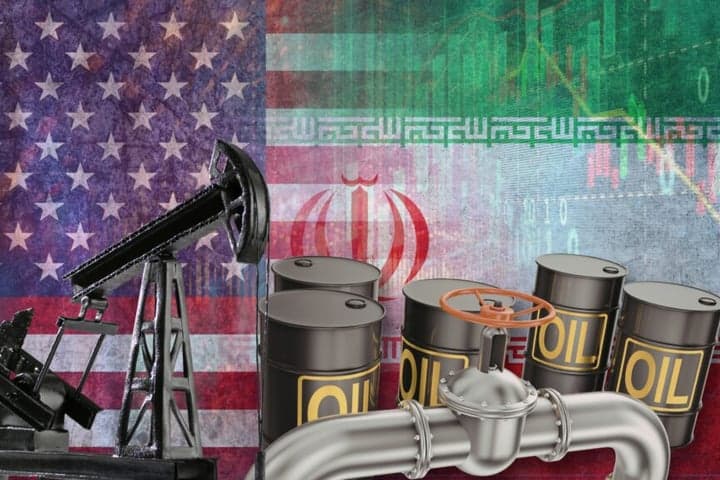
The Persian Gulf has long been a theater of calculated brinkmanship, but the recent assault on Kharg Island marks a profound recalibration of American military and economic strategy. When U.S. Central Command warplanes pierced the airspace over Iran’s most vital crude oil export terminal, the objective was strictly military, yet the underlying message was fundamentally economic.
President Donald Trump announced that American forces obliterated every military installation on the island while intentionally sparing the sprawling petroleum infrastructure that handles ninety percent of Tehran’s oil shipments. This precise calibration of force reveals a high-stakes doctrine of deterrence by hostage.
Kharg Island is not merely a geographic coordinate in the Persian Gulf; it is the economic jugular of the Islamic Republic. Located sixteen miles off the Iranian coast and a strategic stone’s throw from the Strait of Hormuz, the island is the central node through which the regime funds its state apparatus and its network of regional proxies.
By surgically dismantling the island’s defense mechanisms and military assets without igniting the immense crude reserves, the administration executed a textbook demonstration of escalation control. The transmission to Tehran was unmistakable: the absolute destruction of your primary revenue stream is no longer a logistical challenge, but merely a political choice.
That choice, according to the President, hinges entirely on the unimpeded flow of global commerce through the Strait of Hormuz. This narrow waterway serves as the transit route for roughly one-fifth of the world’s daily oil supply.
A disruption here would transcend regional conflict, instantly metastasizing into a global economic crisis characterized by skyrocketing energy prices, shattered supply chains, and rampant inflation. Trump’s stark warning that any interference with commercial shipping would immediately prompt a reconsideration of his restraint underscores a pivotal shift in Washington’s rules of engagement.
The preservation of the global economic order is now explicitly tied to the physical survival of Iran’s energy infrastructure.
To understand the gravity of this moment, one must look beyond the immediate tactical success of the Kharg Island raid. In his social media broadcasts and subsequent media appearances, including a detailed interview on Fox News Radio, Trump outlined a vision of American force projection that is both expansive and deeply uncompromising.
He dismissed long-standing Iranian ambitions for regional hegemony and the destruction of Israel as fundamentally neutralized, declaring those master plans definitively dead. Furthermore, his commitment to utilize the United States military to escort commercial vessels through the Strait introduces a highly volatile operational reality.
Naval escorts in confined, heavily contested waters represent an immense logistical undertaking fraught with the risk of miscalculation. The Islamic Revolutionary Guard Corps operates a vast fleet of fast-attack craft, unmanned aerial vehicles, and coastal missile batteries designed precisely for asymmetric warfare in the Strait of Hormuz.
By inserting American vessels into this flashpoint as a protective shield for international shipping, Washington is daring Tehran to initiate a direct confrontation. It transforms every commercial tanker transit into a potential trigger for a wider war.
Moreover, the President’s promise to strike Iran very hard over the coming week suggests that the Kharg Island operation was not a standalone punitive measure, but rather the opening salvo in an active, multi-phase campaign to degrade Iranian offensive capabilities. This forward-leaning posture places the ball squarely in Tehran’s court.
The Iranian leadership must now navigate an existential dilemma. Retaliation risks the total annihilation of the crown jewel of their oil economy, which would inevitably precipitate the collapse of their domestic stability.
Inaction, however, risks projecting terminal weakness to both their domestic hardliners and their proxy networks scattered across Lebanon, Syria, Iraq, and Yemen.
As the world watches the waters of the Middle East, the broader geopolitical architecture of the region is being aggressively rewritten. The calculated restraint shown at Kharg Island may have averted an immediate global energy shock, but it has simultaneously established a precarious new baseline for international conflict.
The strategic ambiguity that once defined the shadow war between Washington and Tehran has evaporated, replaced by stark ultimatums and the undeniable presence of American hard power. The days ahead will test the durability of this aggressive deterrence, as the global economy holds its collective breath, tethered intimately to the safe passage of ships through a twenty-one-mile-wide chokepoint.