Iran names Mojtaba Khamenei supreme leader as multi-front war escalates
An uncompromising new ruler takes absolute control over the country’s military and nuclear ambitions following his father’s assassination. The sudden succession has already triggered global economic panic and threatens to drag international forces deeper into the deadly conflict.
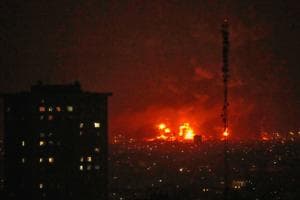
The dust had barely settled over the craters in Tehran before the Islamic Republic signaled its ultimate act of defiance. Under the watchful eyes of a fractured international community and the shadow of relentless American and Israeli bombardment, Iranian state television broadcast a succession that will redefine the geopolitics of the Middle East.
Ayatollah Mojtaba Khamenei has been elevated to the position of supreme leader, stepping into the void left by the assassination of his father. This is not merely a transfer of power; it is an ideological entrenchment.
Regarded by regional analysts as a figure even more uncompromising than his predecessor, the younger Khamenei now holds absolute authority over a nation locked in a multi-front war, commanding both its vast armed forces and the opaque mechanisms of its nuclear program.
The ascension arrives at a moment of profound global vulnerability. The kinetic war in the Middle East has immediately transmuted into an economic shockwave.
Oil prices surged violently upon the news of the succession, sending Tokyo equities plunging and reigniting fears that exorbitant energy costs will suffocate consumer spending across the Western hemisphere. The global markets are reacting to a chilling reality: diplomatic off-ramps are rapidly disintegrating.
This economic anxiety is tethered to a staggering human toll that continues to climb with brutal velocity. More than 1,200 people have perished in Iran, nearly 400 in Lebanon, and a rising count in Israel.
For the United States, the cost of the conflict deepened with the confirmation of a seventh American military casualty. Army Staff Sergeant Benjamin N. Pennington, a specialist in missile warning and satellite communications from a Colorado-based space battalion, succumbed to wounds sustained at a Saudi Arabian air base.
At the heart of this escalating crisis is the specter of Iran’s nuclear ambitions, a threat now under the sole discretion of a new, hardline autocrat. The International Atomic Energy Agency faces a critical blind spot as strikes hit Iranian nuclear sites, including facilities in Natanz and Isfahan.
Rafael Mariano Grossi, the chief of the United Nations nuclear watchdog, has indicated that hundreds of pounds of uranium enriched to 60 percent purity sit in sealed barrels at Isfahan. This material remains a mere technical pivot away from weapons-grade capability.
While international monitors operate under the widespread assumption that the uranium has not been relocated, the fog of war prevents absolute certainty. The stakes are existential, dictating the aggressive posture of the American-Israeli coalition aimed at systematically dismantling Iran’s ballistic and nuclear infrastructure.
The theater of war, however, refuses to be contained within Iranian borders. The Levant is rapidly descending into a catastrophic proxy battle.
Lebanon stands on the precipice of ruin, with domestic leadership warning that clashes between Israel and Hezbollah threaten to reduce the nation to the ashes of another Gaza. The humanitarian implications are staggering.
UNICEF reports a horrifying metric of civilian suffering, noting that more than ten children are being killed daily in the crossfire of retaliatory strikes. The tactical brutality of the conflict has been further underscored by Israeli reports of Iranian cluster munitions blanketing civilian areas, a method of warfare that maximizes indiscriminate devastation.
As the regional architecture fractures, the conflict is pulling in actors far beyond the immediate blast zones. France is deploying an armada, including the aircraft carrier Charles de Gaulle, to the Eastern Mediterranean to secure European frontiers and eventually shepherd energy tankers through the contested Strait of Hormuz.
Turkey has been forced to intercept Iranian ballistic missiles violating its airspace, prompting stern warnings from Ankara. Concurrently, a quiet exodus is underway at the Turkmen border, where an autocratic, historically isolated nation has opened a 24-hour humanitarian corridor to absorb a growing tide of refugees fleeing the bombardment.
Fascinatingly, the shockwaves of this war have even reached the courtrooms of Silicon Valley. In an unprecedented intersection of modern warfare and artificial intelligence, the tech firm Anthropic has launched legal action against the Trump administration.
The Pentagon recently labeled the company a supply chain risk due to its refusal to allow unrestricted military application of its AI models. This dispute highlights a profound secondary narrative: the warfare of the twenty-first century is increasingly reliant on private sector algorithms, and the ethical resistance of tech entities is now directly colliding with the mandates of the military-industrial complex.
Looking ahead, the geopolitical landscape appears extraordinarily volatile. While United States officials assert they are systematically destroying Iran’s missile capabilities with overwhelming precision, the political rhetoric emanating from Tehran’s Revolution Square suggests a regime willing to absorb massive damage to preserve its ideological core.
The elevation of Mojtaba Khamenei guarantees that the Islamic Republic will not quietly capitulate. As international leaders call for emergency Security Council sessions and attempt to navigate the intricate web of regional alliances, the window for de-escalation is closing.
The world is watching a deeply radicalized leadership take the helm of an embattled nation, armed with advanced weaponry and cornered by a relentless coalition, setting the stage for a prolonged and devastating chapter in modern history.