Transforming Industries: How Computer Vision is Revolutionizing Manufacturing
The manufacturing landscape is undergoing a seismic shift, driven by advancements in technology. Among these, computer vision stands out as a pivotal innovation that is transforming the sector. By enabling machines to interpret visual data, computer vision is enhancing quality control, automating processes, and ultimately improving efficiency across production lines. The Rise of Computer Vision

The manufacturing landscape is undergoing a seismic shift, driven by advancements in technology. Among these, computer vision stands out as a pivotal innovation that is transforming the sector. By enabling machines to interpret visual data, computer vision is enhancing quality control, automating processes, and ultimately improving efficiency across production lines.
The Rise of Computer Vision in Manufacturing
Computer vision refers to the capability of computers to interpret and make decisions based on visual information. This technology utilizes algorithms and machine learning to process images and videos, allowing machines to “see” and understand their surroundings. The foundation of computer vision lies in deep learning and neural networks, which enable systems to recognize patterns and features within images.
Industries from healthcare to automotive have leveraged this technology, but manufacturing has been one of the foremost sectors to adopt it, due to the high demand for precision and efficiency. Companies are turning to computer vision to not only streamline their processes but also to reduce errors that could lead to significant financial losses.
Enhancing Quality Control
Quality control is a critical aspect of manufacturing, where even minor defects can lead to substantial repercussions. Traditional methods often rely on manual inspections, which can be time-consuming and prone to human error. Computer vision systems, however, can perform real-time inspections with a high degree of accuracy.
For instance, many manufacturers are implementing automated visual inspection systems that utilize high-resolution cameras and advanced algorithms to identify defects on production lines. These systems can analyze various parameters, including dimensions, surface finishes, and color consistency, ensuring only products that meet stringent quality standards reach consumers.
According to a recent report by Technavio, the global automated inspection system market is projected to grow by over 6% through 2025, with the rise of computer vision playing a significant role in this expansion.
Automating Processes
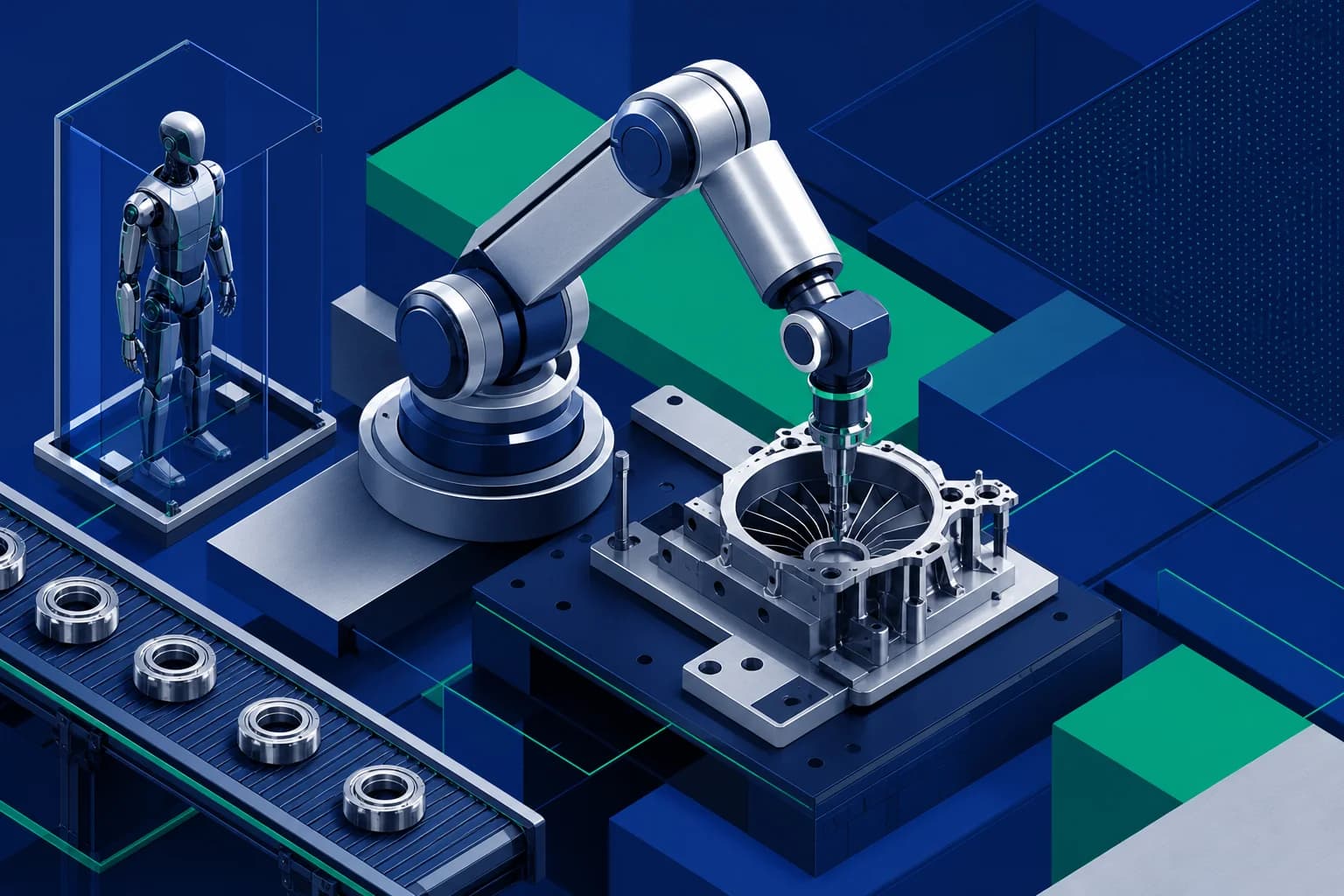
Beyond quality control, computer vision is also significantly automating various manufacturing processes. Robotic systems equipped with vision capabilities can accurately guide themselves in the production environment, which is especially beneficial in complex assembly tasks.
Take the automotive industry, for example, where robots powered by computer vision can assemble parts with unparalleled precision. These robots are equipped with cameras that allow them to identify components, assess their placement, and adjust their movements accordingly. This not only speeds up production but also cuts down on waste and ensures that each assembly meets quality standards.
As more manufacturers embrace Industry 4.0 principles—where smart manufacturing processes leverage IoT, AI, and robotics—computer vision stands at the forefront, driving the digital transformation of factories worldwide.
Reducing Downtime and Enhancing Maintenance
In manufacturing, unplanned downtime can be a significant cost factor. Computer vision systems can assist in predictive maintenance, allowing manufacturers to identify equipment issues before they lead to failure. By continually monitoring machinery through visual inspection, these systems can detect anomalies such as wear and tear or misalignment.
For example, vision systems equipped with deep learning can analyze the operational data of a machine over time to forecast when maintenance should be performed. This proactive approach minimizes interruptions in production and saves costs associated with emergency repairs.
According to McKinsey, predictive maintenance can bring about up to a 25% reduction in maintenance costs and a 70% decrease in downtime, showcasing the enormous potential that computer vision holds for the manufacturing sector.
Challenges and Ethical Considerations
Despite the numerous advantages, the adoption of computer vision is not without challenges. The initial setup costs, including investments in hardware, software, and expertise, can be substantial. Additionally, integrating computer vision systems into existing manufacturing setups may require a rethinking of processes and workflows.
Moreover, there are ethical considerations tied to the adoption of automation. As machines take on more roles traditionally held by humans, concerns about job displacement arise. It is imperative for companies to balance technological advancement with human workforce needs, ensuring that training and reskilling opportunities are available.
The Future of Computer Vision in Manufacturing
The future of computer vision in manufacturing appears bright, with ongoing advancements promising even greater refinement of these technologies. As machine learning algorithms become more sophisticated, computer vision systems will only improve in their accuracy and efficiency.
Moreover, the integration of augmented reality (AR) with computer vision may soon revolutionize how workers interact with the manufacturing environment, providing real-time data overlays that enhance decision-making and training. The combination of these technologies could lead to smarter factories, where machines work in harmony with humans to achieve unprecedented levels of efficiency and productivity.
In conclusion, computer vision is not merely a technological trend; it represents a paradigm shift in how manufacturing operates. As the sector embraces these innovations, the potential for enhanced quality, efficiency, and safety will continue to transform industries globally, paving the way for a more automated and intelligent future.