Get My Parking Deploys Multi-Agent AI Architecture for Automated Facility Management
Get My Parking is utilizing a distributed network of specialized AI agents to modernize parking operations and eliminate physical friction at facility gates.
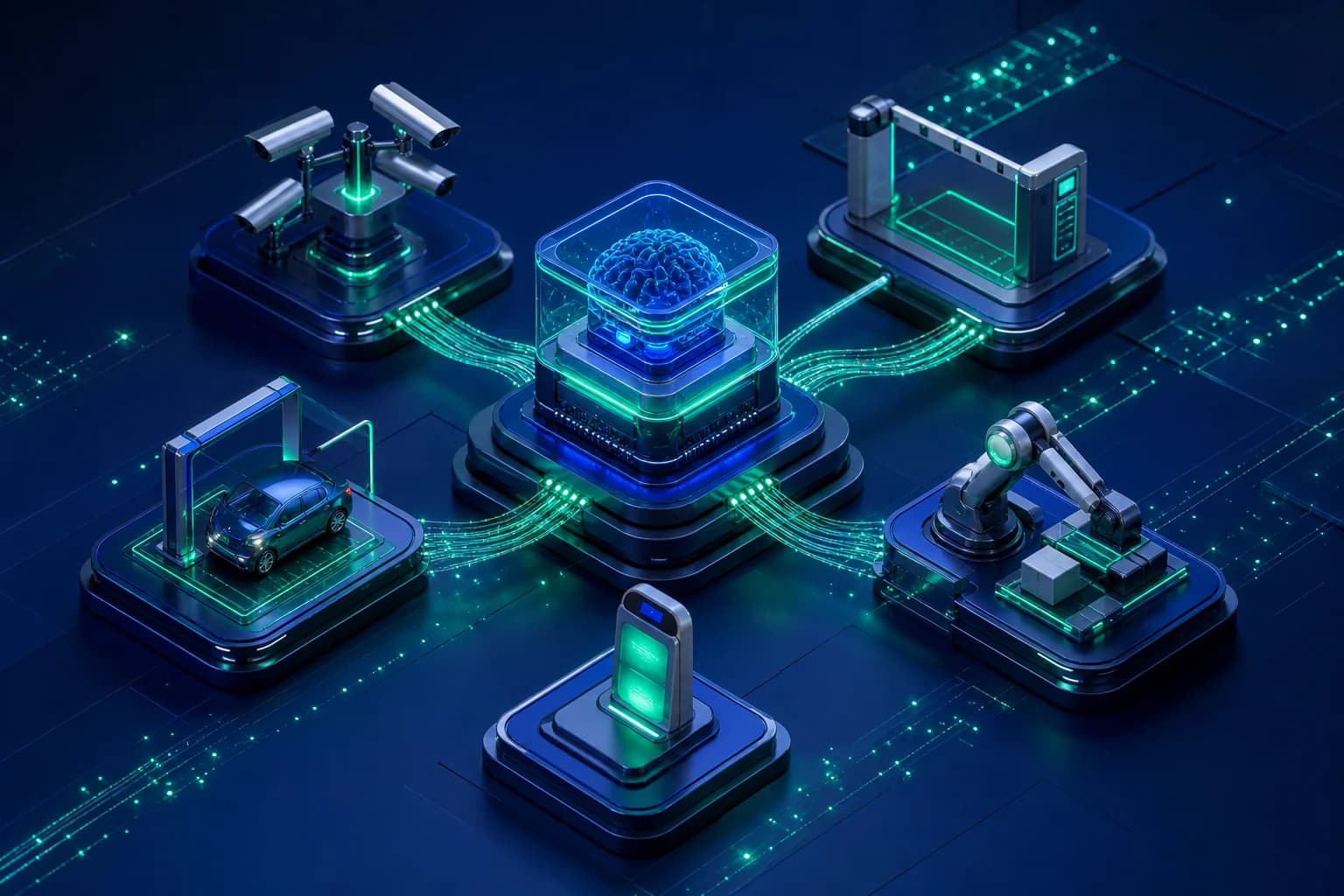
Get My Parking is shifting the operational paradigm of parking facilities by deploying a multi-agent artificial intelligence framework designed to eliminate physical friction at entry and exit points. The system, branded as AVA, functions as a distributed network of specialized agents rather than a monolithic model, utilizing computer vision and conversational intelligence to manage complex site logistics.
The architecture relies on several distinct modules to handle specific operational tasks. AVA Ops serves as a conversational co-pilot that allows facility managers to query databases regarding session failures, payment anomalies, and permit status without navigating disparate software interfaces. This agent-based approach streamlines troubleshooting by centralizing data access into a natural language query system.
For consumer-facing interactions, AVA Snap leverages computer vision to automate receipt validation processes. The system identifies merchant details and eligibility criteria from images, effectively replacing manual verification workflows while simultaneously flagging potential fraudulent submissions. This capability allows operators to integrate validation programs without deploying additional hardware scanners.
In the lane, AVA Lane provides 24/7 conversational support to drivers, addressing common issues such as payment disputes or permit errors. The system supports multilingual interaction and maintains a failover protocol that routes complex inquiries to human support staff when the automated agent encounters edge cases.
The platform also incorporates AVA Vision, which utilizes deep learning for vehicle identification beyond standard license plate recognition. According to the technical documentation provided by the company, the vision modules employ high-performance convolutional neural networks optimized for low-latency inference, allowing for real-time processing of vehicle attributes like color, make, and unique physical identifiers. This intelligent matching reduces the reliance on manual intervention for session reconciliation when plates are obscured or unreadable, ensuring high throughput even in challenging lighting conditions or varied camera angles.
The company’s ExpressLane, or AI-PARCS, serves as the primary hardware-agnostic interface for ticketless entry and exit. By utilizing vision-based AI, the system achieves a 99.8% accuracy rate in license plate recognition, enabling digital payment processing and real-time capacity management. This integration allows operators to modernize legacy infrastructure with minimal capital expenditure.
The technical implementation provides remote visibility into lane activity, enabling centralized control over multiple geographically dispersed facilities. Operators can monitor equipment health, adjust capacity parameters, and respond to alerts from a unified dashboard. This remote capability is critical for scaling operations across diverse environments without increasing on-site headcount.
The shift toward agentic workflows in parking management reflects a broader trend in MLOps where specialized models outperform general-purpose systems in high-stakes, real-world environments. By decomposing complex tasks into discrete, manageable agents, Get My Parking reduces the computational overhead and error rates associated with traditional, monolithic automation software. This modularity ensures that individual components can be updated or retrained without disrupting the entire facility ecosystem, which is essential for maintaining high availability in mission-critical infrastructure.
The reliance on hardware-agnostic vision systems addresses the long-standing challenge of interoperability in legacy parking infrastructure. By abstracting the physical gate and ticket hardware into a digital layer, the platform enables a consistent data pipeline across thousands of facilities. This standardization is essential for future-proofing mobility hubs against the rapid evolution of connected vehicle technology and data-driven urban planning.
The roadmap for the AVA ecosystem focuses on predictive maintenance and proactive issue resolution. Future iterations aim to identify operational bottlenecks before they manifest, using historical data to recommend adjustments to parking performance. These advancements will likely shift the role of the parking operator from reactive troubleshooting to high-level system oversight.
The company continues to expand its footprint across five continents, integrating its software with emerging mobility solutions like EV charging stations. These integrations suggest a long-term strategy of positioning parking facilities as critical nodes in the broader smart city infrastructure.