Jeff Dean Departs Google to Launch AI Automation Startup Discovery Loop
The long-time chief scientist and architect of Google’s foundational infrastructure is leaving to pursue automated machine learning systems.
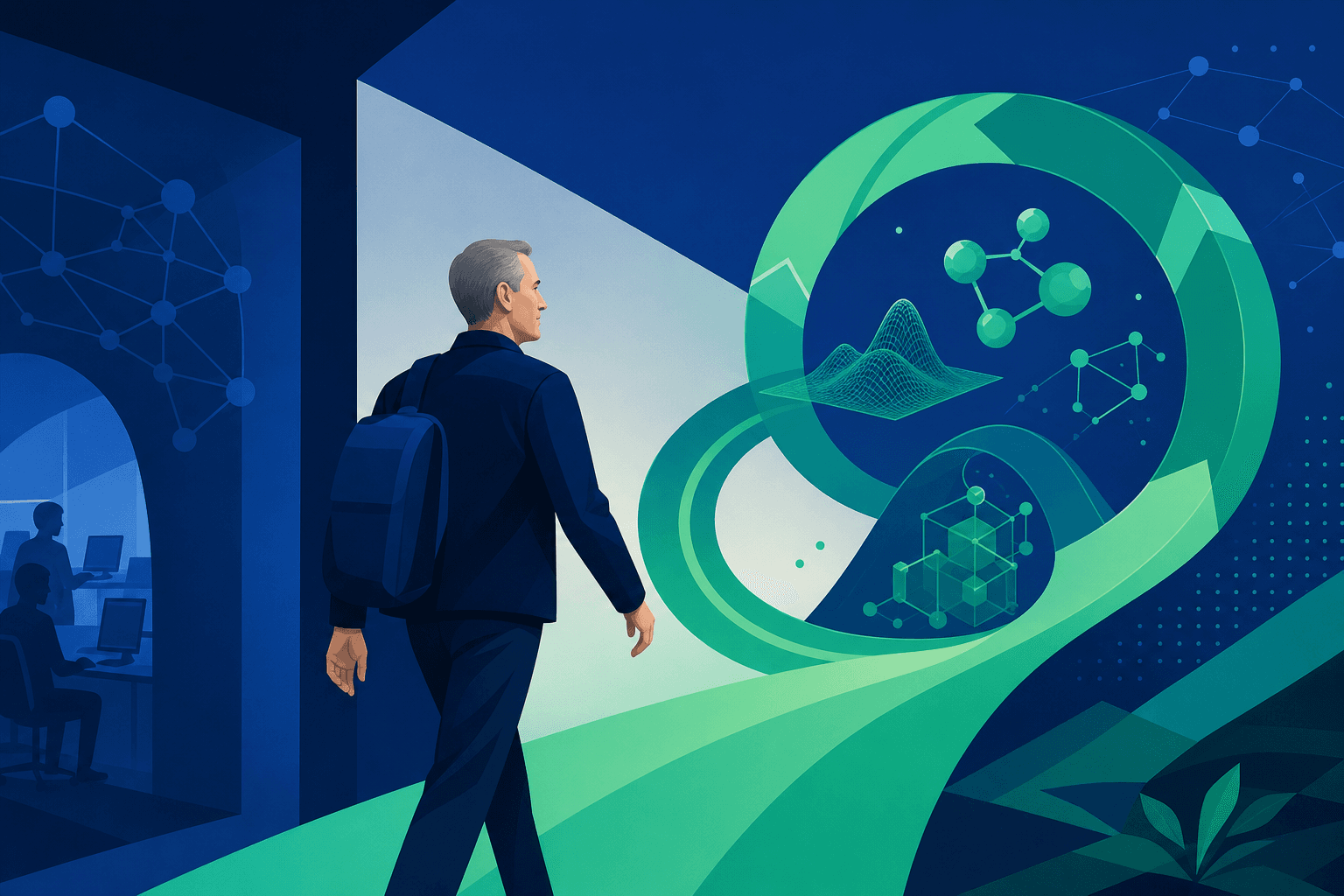
Jeff Dean, the chief scientist at Google DeepMind and a foundational figure in the company’s technical history, confirmed his departure from the organization on August 6, 2026. After a 27-year tenure that began when the company employed only 25 people, Dean is moving to co-found Discovery Loop, a public benefit corporation focused on automating machine learning and scientific discovery.
The transition shifts the leadership structure of Google’s core engineering teams, as Dean leaves alongside longtime collaborators Sanjay Ghemawat, Oriol Vinyals, and Quoc Le. These individuals were instrumental in developing the distributed systems that underpin modern web-scale computing, including MapReduce, BigTable, and Spanner. Their collective departure signals a significant shift for the team that pioneered the neural network architectures currently driving the Gemini product line.
Google CEO Sundar Pichai acknowledged the departure by highlighting the technical transitions Dean led, ranging from early search infrastructure to the contemporary AI era. Despite the exit, Alphabet has secured a role as a founding investor and cloud provider for the new venture. This arrangement ensures that Discovery Loop will retain access to the compute resources necessary for its research objectives.
Discovery Loop aims to move beyond current human-intensive experimental loops by building AI systems capable of recursive self-improvement. The founders intend to apply these automated systems to complex domains such as chip design, materials science, and drug discovery. By structuring the company as a public benefit corporation, the team seeks to prioritize long-term research goals over immediate financial returns.
The startup focuses on the technical challenge of automating the machine learning lifecycle, specifically targeting the manual trial-and-error processes inherent in neural architecture search and hyperparameter optimization. Dean argues that the current paradigm of human-in-the-loop experimentation creates a bottleneck that limits the speed of scientific progress. By developing autonomous agents that can iterate on model designs without constant human intervention, the team hopes to accelerate the discovery of novel materials and therapeutic compounds.
The move follows a period of internal restructuring at Google, where the Brain research organization was integrated into DeepMind following the rapid rise of competitive large language models. While Dean co-led the Gemini effort, his departure reflects a broader industry trend where senior researchers seek smaller, more agile environments to pursue specific technical hypotheses. The startup has already secured backing from venture firms including Radical Ventures and Khosla Ventures.
Dean’s technical legacy at Google includes the development of TensorFlow and the TPU program, which provided the hardware and software foundation for the company’s internal AI research. His work on model distillation and mixture-of-experts architectures helped define the current state of large language model development. By shifting his focus to automated machine learning, Dean is attempting to solve the bottleneck of human-led experimentation in scientific research.
The significance of this exit lies in the departure of the primary architect behind Google’s infrastructure stack. As Google faces increased competition in generative AI development, the loss of a senior fellow who influenced nearly every layer of the stack presents a challenge for internal knowledge continuity. The collaboration between Google and Discovery Loop suggests a strategic effort to maintain ties with key researchers while allowing them to pursue high-risk, high-reward technical projects outside the corporate structure.
The technical ambition of Discovery Loop hinges on the ability to create robust, self-correcting feedback loops that can operate across diverse scientific datasets. If successful, this approach could fundamentally alter how researchers approach the NAE Grand Challenge problems by shifting the burden of iterative testing from human engineers to automated systems. The transition represents a move toward a more autonomous model of scientific inquiry that relies on machine-driven hypothesis generation.
Industry observers will monitor the progress of Discovery Loop as it attempts to move from theoretical automated research to practical engineering applications. The success of the startup will depend on its ability to demonstrate that self-improving loops can outperform traditional, human-guided development cycles in complex scientific domains. Future milestones will likely involve the release of technical papers detailing the specific mechanisms the team uses to achieve recursive improvement in model architectures.