Hippocampal plasticity dynamics reveal state-dependent memory encoding
New research from the University of Tübingen demonstrates that hippocampal memory circuits rely on natural shifts in alertness to gate neural plasticity.
Memory formation in the mammalian brain appears to be a highly selective process governed by fluctuating internal states rather than a continuous stream of recording. Researchers at the University of Tübingen have identified that the hippocampus undergoes periodic shifts in alertness that fundamentally alter its receptivity to new information, a discovery published in the journal Nature Communications on July 24, 2026.
The study, led by Professor Andrea Burgalossi of the Institute of Neurobiology and the Werner Reichardt Center for Integrative Neuroscience, investigates how the brain manages episodic memory. By monitoring hippocampal activity in mice, the team observed that place cells—neurons responsible for mapping spatial environments—exhibit distinct activation patterns linked to the animal’s arousal level. Dr. Eduardo Blanco-Hernandez, a lead author of the research, notes that observing these cells allows scientists to witness the real-time formation and reactivation of memory substrates.
The researchers utilized pupil dilation as a proxy for internal alertness, a metric that correlates with neural engagement in both rodents and humans. Nicola Sartorato, a researcher at the Center for Integrative Neuroscience, observed that specific subsets of place cells show heightened activity during periods of increased arousal. These shifts in neural activity occurred independently of physical movement, indicating that the brain’s internal state actively modulates the neuronal substrate of memory.
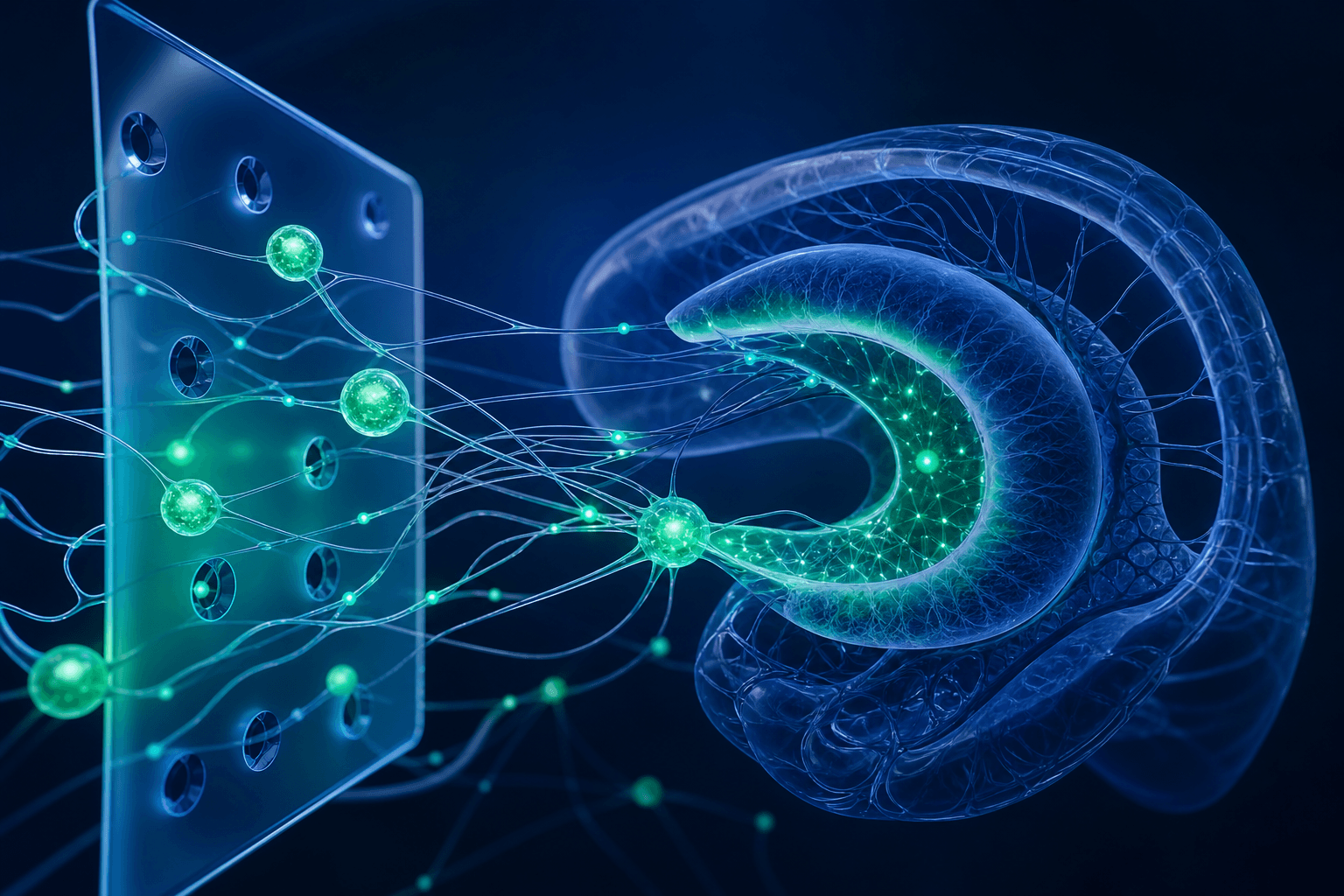
To measure these dynamics, the team employed high-density electrophysiological recordings to capture the firing rates of individual hippocampal neurons. By cross-referencing these firing rates with the animal’s pupillometry data, the researchers mapped the precise temporal alignment between arousal states and neuronal recruitment. The data revealed that the firing threshold for place cell activation is not static but shifts in tandem with the animal’s physiological state.
Mathematical analysis of the recorded spike trains showed that the spatial information content of these neurons increases significantly during high-alertness windows. This suggests that the hippocampus employs a gating mechanism to filter incoming sensory data, ensuring that only high-salience information is encoded into the long-term memory trace. The findings indicate that the brain prioritizes energy expenditure by restricting plasticity to these specific, high-readiness temporal windows.
Theta oscillations, which are rhythmic neural patterns associated with navigation and learning, also displayed fluctuations that mirrored these changes in alertness. The research team suggests that these oscillations serve as a functional signal of the hippocampus entering a state of heightened plasticity. This state allows for the rapid reorganization of neural connections, which is essential for capturing unique, non-repeatable life events.
Professor Burgalossi emphasizes that episodic memory requires immediate and efficient encoding because these experiences lack the repetition found in other forms of learning. The brain must therefore possess a mechanism to prioritize certain moments for storage while ignoring others. This dynamic gating suggests that the hippocampus is not a passive recording device but an active, state-dependent processor.
The researchers argue that this mechanism provides a biological solution to the problem of information overload in the hippocampus. By coupling memory formation to arousal, the brain effectively tags experiences that are likely to be relevant for survival or future navigation. This integration of physiological state and cognitive processing represents a critical optimization strategy for neural systems.
To validate this hypothesis, the researchers applied targeted stimulation to memory-related neurons during these identified windows of high plasticity. Neurons that previously lacked location-specific activity began to encode spatial data, effectively integrating themselves into the hippocampal network as new place cells. This recruitment process demonstrates that the timing of neural input is as critical as the information itself for successful memory consolidation.
The implications of this research extend to the fundamental understanding of how biological systems manage information density and storage efficiency. By identifying the specific conditions under which neural circuits become receptive to modification, the study provides a clearer picture of the biological constraints on learning. This mechanism of state-dependent plasticity ensures that the brain allocates its limited resources to the most salient experiences.
The findings suggest that the brain’s capacity for memory is not a static property of its architecture but a dynamic feature that oscillates based on physiological states. Future research will likely focus on the precise neurochemical pathways that trigger these windows of readiness. Understanding these gates could offer deeper insights into how the brain balances the need for stability with the necessity of constant, rapid adaptation to new environments.