Flexible Organic Hydrogel Electrodes Extend BCI Longevity to 18 Months
Researchers have developed a high-density, ultra-flexible electrode array that maintains signal integrity for over 550 days by minimizing mechanical friction with neural tissue.
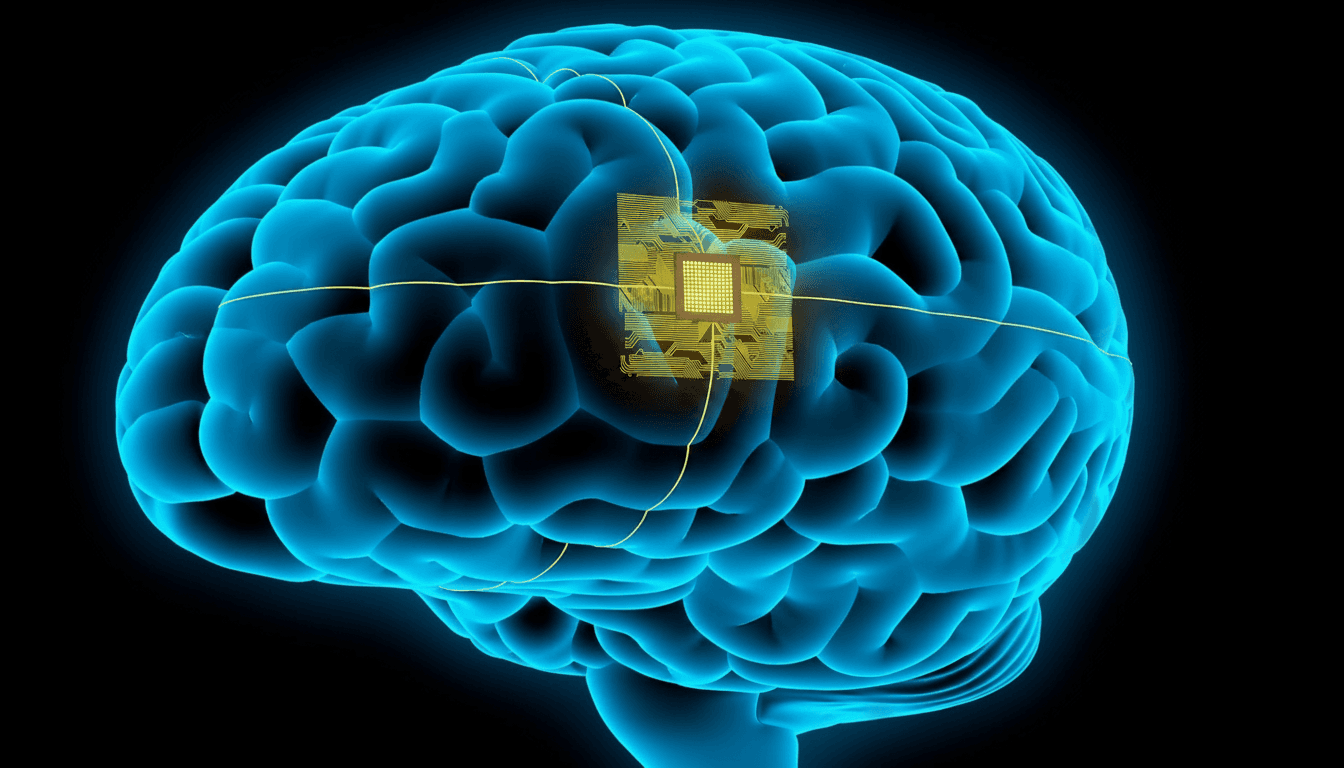
A collaborative research team from Tsinghua University’s Shenzhen International Graduate School, the University of Tokyo, and the Shenzhen-Hong Kong Institute of Brain Science has engineered an ultra-flexible electrode array designed to overcome the mechanical mismatch between conventional rigid brain-computer interfaces and soft neural tissue. This development addresses the persistent challenge of signal degradation caused by the formation of glial scar tissue, which frequently renders invasive implants ineffective over time.
The core innovation lies in the use of an all-organic material identified as a conductive hydrogel with interfacial percolation. By pre-anchoring the hydrogel to an ultrathin parylene substrate, the researchers successfully stabilized the material’s geometry before applying high-precision photolithography. This manufacturing process allows the creation of a 128-channel array measuring only 9 micrometers in thickness, providing a data density ten times greater than previous hydrogel-based iterations.
Electrical performance metrics indicate a conductivity of 2,512 S/cm, a threshold sufficient to capture low-amplitude neural oscillations. The material’s structural integrity was validated through rigorous mechanical testing, where it demonstrated the ability to withstand 1,000 cycles of 30 percent tensile strain. This capacity for deformation aligns with the biological limits of brain tissue movement, ensuring the device remains functional within the dynamic environment of the cranium.
In vivo trials conducted on rabbits provided longitudinal data on the device’s stability. Over a period of 550 days, the implants maintained a signal-to-noise ratio that retained 94 percent of its initial clarity. Histological analysis performed at the conclusion of the 18-month study revealed minimal immune response and a notable absence of the dense fibrous encapsulation that typically compromises long-term neural recording.
The manufacturing process specifically addresses the swelling issues inherent in traditional hydrogels by utilizing the parylene substrate as a structural anchor. This allows for the precise carving of micro-channels that maintain their spatial configuration even when exposed to the high-moisture environment of the brain. By locking the hydrogel into a defined grid, the researchers ensure that the electrical pathways remain consistent throughout the lifespan of the implant.
The study highlights the potential for organic electronics to bridge the gap between machine-learning decoders and biological neural networks. By minimizing the foreign body response, the researchers have demonstrated a pathway toward implants that could theoretically remain functional for the duration of a patient’s life.
The resulting all-organic ECoG array conforms to the cortical surface, minimizing foreign body response and providing exceptional signal quality, with the longest record up to 550 d[ays]
, the research team stated in their technical report.
The primary engineering hurdle for current brain-computer interfaces remains the transition from acute experimental success to chronic, long-term reliability. Traditional metallic electrodes, such as those composed of platinum, create friction against the brain’s soft parenchyma, leading to the mechanical irritation that triggers the body’s protective inflammatory response. This new hydrogel architecture effectively decouples the mechanical stiffness of the electrode from the biological substrate, allowing for a mechanically compliant integration with the cortex.
From an MLOps and data processing perspective, the stability of the input signal is critical for the performance of neural decoding algorithms. Fluctuations in signal quality due to scar tissue formation require frequent recalibration of machine learning models tasked with interpreting motor intent or sensory feedback. The high-fidelity, long-term data stream provided by this flexible array could significantly reduce the computational overhead associated with model retraining and drift compensation in clinical BCI applications.
The consistency of the signal-to-noise ratio over the 18-month trial period suggests that the underlying neural data remains stable enough to support long-term model training without the need for constant feature re-engineering. This stability is a prerequisite for deploying sophisticated deep learning architectures that rely on consistent input distributions to maintain accuracy. By reducing the noise floor, the researchers enable more robust feature extraction from the raw neural waveforms.
Future research will likely focus on scaling the channel density further while maintaining the structural stability of the hydrogel-parylene interface. As the field moves toward more complex neural prosthetics, the ability to maintain consistent, high-bandwidth data acquisition over multi-year timelines will be the defining factor for clinical viability. The industry must now determine if these laboratory results can be replicated in larger, more complex mammalian models to confirm the safety profile for human trials.