US-Iran Tensions Imperil Global Economy
The looming threat of conflict in the Gulf risks widespread inflation and a severe economic downturn by impacting oil, gas, agriculture, and tech supply chains.
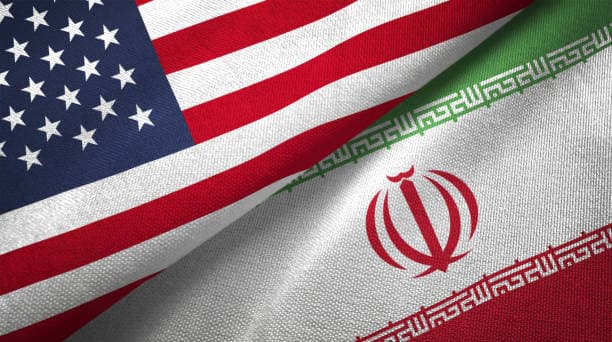
The air above the Strait of Hormuz, usually a superhighway for the world’s petroleum, feels heavy with an unspoken tension.
For weeks, the prospect of a direct military confrontation between the United States and Iran has metastasized from a distant worry into a tangible threat, now occupying the urgent attention of boardrooms from Wall Street to Silicon Valley.
This isn’t merely another regional skirmish; it is a potential systemic shock, a crucible for a global economy already brittle from years of inflation, trade friction, and geopolitical fragmentation.
The question looming over policymakers and market strategists is not just whether the conflict erupts, but what cascading calamities it would unleash upon an interconnected world dangerously underpricing the true cost of such an event.
The most immediate and visceral impact, of course, would be on energy markets.
Iran’s strategic position, straddling the narrow chokepoint of the Strait of Hormuz through which nearly a fifth of the world’s daily oil supply transits, renders it a singular vulnerability.
Even a limited military engagement, analysts warn, could severely impede tanker traffic, sending Brent crude prices soaring from their current eighty-dollar range to well above one hundred and twenty dollars per barrel, with some projections reaching far higher.
Such a spike would extend far beyond the gas pump, rippling through every facet of global manufacturing, shipping, and petrochemical production.
For consumers already strained by persistent grocery inflation, this energy shock would compound an already acute cost-of-living crisis, feeling like salt in an open economic wound.
The tremors would not be confined to oil.
Natural gas markets, already volatile from European supply constraints following the Russia-Ukraine war and surging Asian demand, would face immense pressure.
As one of the world’s largest gas producers, any disruption to Iran’s output, or indeed to broader Gulf production, would tighten an already precarious global supply, leaving European utilities particularly exposed as they strive to rebuild depleted reserves.
Beyond energy, the agricultural sector, less obviously but equally significantly, would be hit hard.
Higher energy costs directly translate to elevated fertilizer prices, increased transportation expenses for grains and livestock, and greater processing costs across the entire food supply chain.
A sustained oil price surge could drive global food inflation back to its 2022 peaks, threatening widespread food insecurity, especially in vulnerable developing nations.
Perhaps most unexpectedly, the artificial intelligence infrastructure boom, the driving force behind recent American technological expansion and the ascent of companies like Nvidia, faces a peculiar vulnerability.
The multi-trillion-dollar investments in data centers and the relentless demand for advanced semiconductors, largely manufactured in Taiwan, rely on an uninterrupted, just-in-time global supply chain.
A conflict in the Gulf introduces risk through multiple channels.
Directly, data centers are ravenous consumers of electricity; a wartime energy premium, fueled by soaring oil and gas prices, would profoundly stress their economic viability, impacting a sector already grappling with immense power demands.
More insidiously, a U.S.-Iran conflict could escalate regional instability, drawing in proxy actors such as the Houthis, who have already demonstrated a capacity to disrupt Red Sea shipping lanes.
These critical maritime arteries are indispensable for transporting goods between Asia and Europe, including the highly sensitive components of the semiconductor industry.
Even modest shipping delays, increased insurance premiums, or rerouted vessels would cascade into production bottlenecks, adding time and cost to a manufacturing process predicated on surgical precision and global interconnectedness.
Financial markets, meanwhile, exhibit a curious dichotomy.
Defense stocks have seen modest upticks, and oil futures betray increased volatility.
Yet, the broader equity market, particularly the tech-heavy Nasdaq, has shown a surprising resilience, a phenomenon some attribute to algorithmic trading strategies that have not yet fully incorporated the extreme tail risk of a full-scale conflict.
This apparent complacency may prove fleeting.
Travel and tourism would take an immediate and substantial hit, with airlines facing diversions, higher fuel surcharges, and a significant drop in demand.
Gulf carriers, vital connectors between East and West, would be particularly exposed, as would the region’s tourism economies, which have invested heavily in diversification away from oil.
Insurance markets are already reacting, with war risk premiums for Persian Gulf transits climbing, signaling a hidden tax on global trade that will inevitably be passed on to consumers.
Central banks in the developed world confront an unenviable dilemma.
Institutions like the Federal Reserve, poised to consider rate cuts to stimulate cooling economies, would find their calculus upended by a war-driven energy shock.
They would be forced to choose between combating inflationary pressures and supporting economic growth, a stark choice reminiscent of the stagflationary nightmares of the 1970s.
The parallels are not lost on policymakers, nor on Wall Street strategists, who are circulating grim scenario analyses among institutional clients.
While a short, contained strike might produce a temporary market dislocation, the nightmare scenario involves a prolonged conflict, Iranian retaliation against Gulf oil infrastructure or U.S. bases, leading to a sustained bear market, a global recession, and a fundamental repricing of geopolitical risk long undervalued since the Cold War.
Adding a layer of profound unpredictability is the oscillating posture from the Trump administration, whose rhetoric has swung between threats of overwhelming military force and suggestions of diplomatic resolution.
Such ambiguity makes it exceedingly difficult for markets to assign clear probabilities to risk, creating a paralyzing uncertainty that corporate planners abhor.
Furthermore, Iran’s military capabilities, while not matching those of the United States in conventional terms, are designed precisely for asymmetric disruption.
Its ballistic missile arsenal can target assets across the Gulf, its sophisticated cyber capabilities could target critical infrastructure, and its network of proxy forces, from Hezbollah to the Houthis, ensures a conflict would be messy, dispersed, and extraordinarily difficult to contain.
This would be no repeat of the 2003 invasion of Iraq.
For corporate America, the planning horizon has contracted dramatically.
Companies with intricate supply chains traversing the Gulf are reviewing contingency plans.
Energy traders are shoring up inventories.
Airlines are re-evaluating routes.
And in the innovation hubs of Silicon Valley, where an almost messianic belief in perpetual growth has taken root, executives are quietly, anxiously, asking what happens if the chips, quite literally, stop flowing on schedule.
No one has a comforting answer, but the very posing of the question, from boardrooms to trading floors, underscores the precarious moment.
The global economy, meticulously optimized for efficiency over the past three decades, has built supply chains that are long, lean, and exquisitely vulnerable.
A war with Iran would subject these chains to a stress test unprecedented since the oil embargoes of the 1970s.
The stakes are immense, and the margin for error, vanishingly small.