Unlocking the Brain: How Neural Networks Are Transforming AI
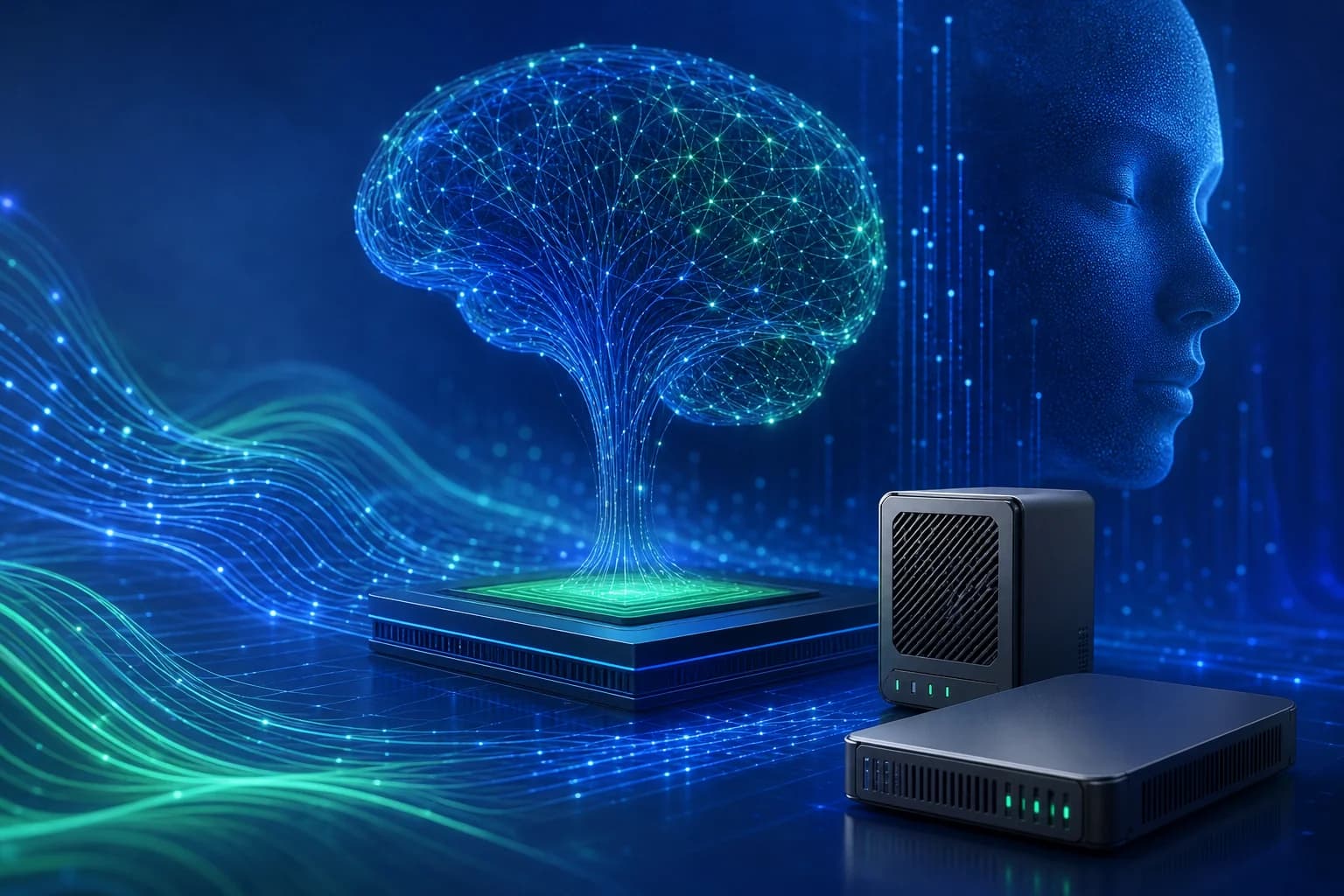
The human brain, with its intricate web of neurons and synapses, has long been a source of fascination for scientists and innovators alike. With over 86 billion neurons working in tandem, the brain’s capacity for learning, adaptation, and problem-solving has inspired the growth of artificial intelligence (AI), particularly through the development of neural networks. These
The human brain, with its intricate web of neurons and synapses, has long been a source of fascination for scientists and innovators alike. With over 86 billion neurons working in tandem, the brain’s capacity for learning, adaptation, and problem-solving has inspired the growth of artificial intelligence (AI), particularly through the development of neural networks. These systems mimic brain activity to process vast amounts of data and identify patterns that would elude traditional algorithms.
The Birth of Neural Networks
The concept of neural networks is not as recent as many might think. The initial idea dates back to the 1950s and 1960s when psychologists and scientists began to draw parallels between human cognition and machine learning. However, the surge in interest and capability has primarily occurred over the last two decades, as advancements in computational power and data availability paved the way for more complex models.
Neural networks operate using layers of nodes—akin to neurons—each connected to others, where each connection has a weight that adjusts as learning occurs. This structure allows them to learn hierarchically, enabling finer details to be established as one ascends through the layers.
The Mechanics of Learning
At the heart of a neural network’s learning process lies a mechanism known as backpropagation. This iterative approach allows the network to adjust weights based on errors present in its predictions. The initial outputs are far from perfect, but with sufficient data and time, the network gradually refines its ability to classify and predict outcomes accurately—a process reminiscent of how humans learn through trial and error.
Deep learning, a subset of machine learning utilizing multi-layered neural networks, has enabled breakthroughs across various domains. For instance, convolutional neural networks (CNNs) excel in image recognition, while recurrent neural networks (RNNs) have significantly advanced natural language processing.
Applications Revolutionizing Industries
The impact of neural networks can be felt across numerous sectors. In healthcare, predictive analytics powered by neural networks plays a crucial role in diagnosing diseases and personalizing treatment plans. AI-driven imaging tools analyze medical images with accuracy that rivals human specialists, detecting anomalies that may go unnoticed.
In finance, algorithms utilizing neural networks assess credit scores, detect fraud, and optimize trading strategies by analyzing market sentiment. The speed and precision with which these systems work have transformed traditional financial practices, enabling institutions to respond more dynamically to fluctuating market conditions.
Transforming Art and Creativity
Neural networks have also made waves in the creative industries. Artists and musicians are exploring how AI can complement human creativity. Tools like DeepArt and OpenAI’s DALL-E use GANs (Generative Adversarial Networks) to produce artwork and music that not only imitates existing styles but also generates entirely new forms of expression. This blending of human creativity with AI capabilities raises profound questions about authorship and the nature of creativity itself.
The Dark Side of AI Innovation
However, as with any transformative technology, the rise of neural networks is not without its challenges. Ethical dilemmas surrounding bias in AI systems present significant obstacles. Neural networks are only as good as the data used to train them; if that data is biased, the outcomes will reflect and even amplify those biases. Instances of racial profiling in facial recognition systems have brought urgent attention to the need for comprehensive data audits and the establishment of ethical guidelines in AI deployment.
Moreover, concerns about privacy loom large. The capabilities of neural networks to analyze personal data raise critical issues regarding consent and the extent to which individuals can control their own information. As companies increasingly rely on these technologies, the onus will fall on stakeholders to ensure that ethical considerations are respected.
The Future: Human-AI Collaboration
Looking forward, the future of neural networks appears bright, characterized more by collaboration than competition between humans and machines. As AI systems become more adept at processing information, they will act as an extension of human capabilities rather than a replacement. From augmenting decision-making in corporate boardrooms to aiding scientific research, the potential for synergistic outcomes is immense.
Moreover, as we delve deeper into understanding human cognition and consciousness, neural networks may evolve to more closely mirror the complexities of the human mind. This exploration could unlock even more sophisticated forms of AI, enriching the tapestry of human experience through technology.
Conclusion: A New Frontier
In essence, neural networks are not just reshaping AI; they are redefining how we perceive intelligence itself. The convergence of human cognition and artificial intelligence promises both groundbreaking advancements and profound ethical challenges. As we stand at this new frontier, striking a balance between innovation and responsibility will be key to navigating the future of neural networks in our daily lives and beyond.