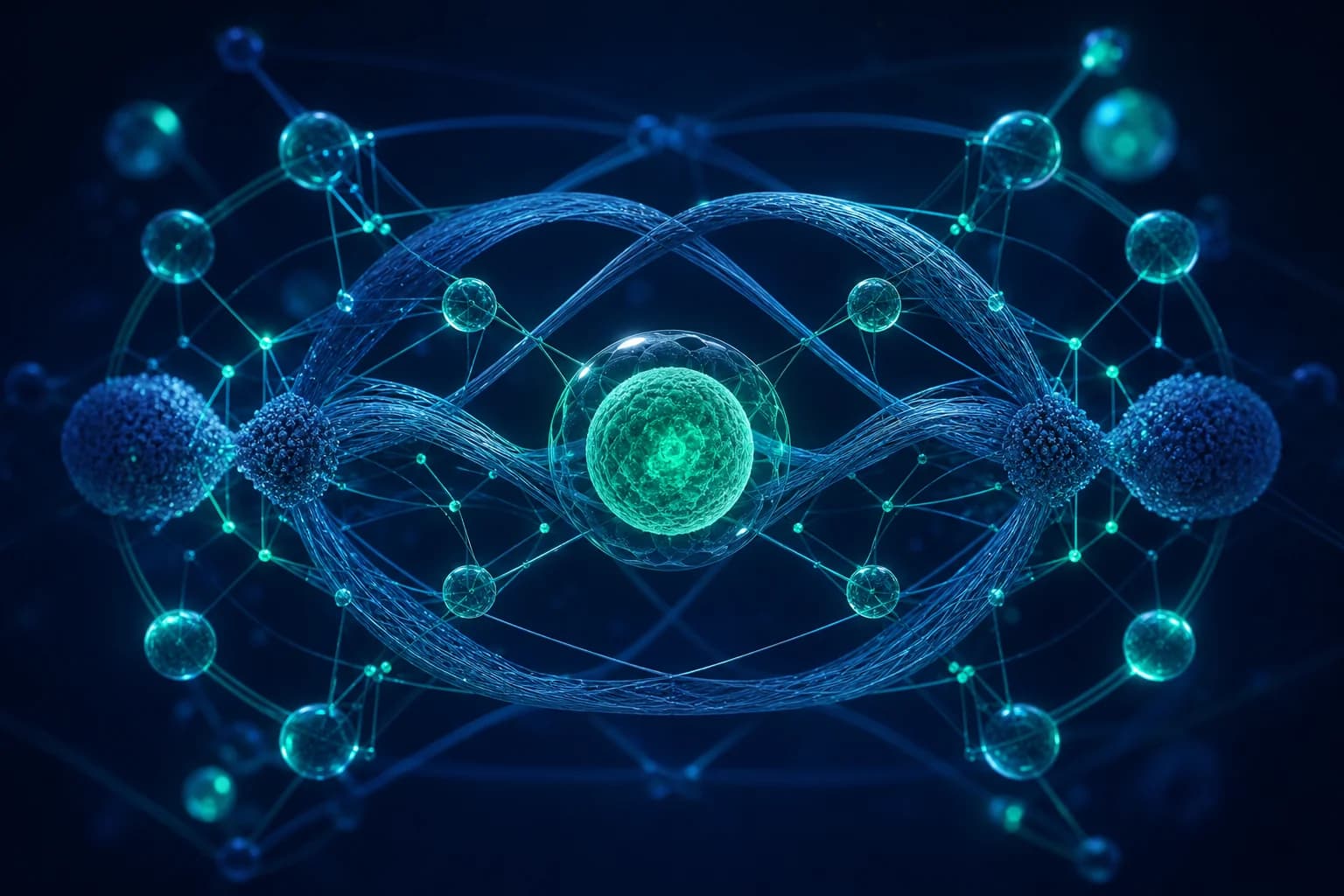
Unlocking the Power of Vision: How Convolutional Neural Networks are Revolutionizing Image Recognition
In a world increasingly dominated by visual content, the capability to accurately interpret images is transforming industries and enhancing our digital interactions. At the forefront of this revolution are Convolutional Neural Networks (CNNs), a class of deep learning algorithms that have significantly advanced the field of image recognition. This article explores the mechanics of CNNs,
In a world increasingly dominated by visual content, the capability to accurately interpret images is transforming industries and enhancing our digital interactions. At the forefront of this revolution are Convolutional Neural Networks (CNNs), a class of deep learning algorithms that have significantly advanced the field of image recognition. This article explores the mechanics of CNNs, their applications, and the future they herald in the realm of computer vision.
Understanding Convolutional Neural Networks
Convolutional Neural Networks are designed specifically for processing pixel data. Inspired by the visual processing mechanisms of the human brain, CNNs use a topology that mimics how we perceive images. The architecture consists of layers that automate feature extraction, thereby eliminating the need for manual intervention.
At the core of CNNs is the convolutional layer, where a set of learnable filters is applied to the input image. These filters slide over the image, performing mathematical operations that highlight specific features, such as edges or textures. This process allows CNNs to capture spatial hierarchies and patterns in the input data. The output from these layers undergoes activation functions, typically Rectified Linear Units (ReLU), to introduce non-linearity, enabling the network to learn complex representations.
The Role of Pooling Layers
Pooling layers follow convolutional layers to down-sample the feature maps generated. This step is crucial for reducing the dimensionality of the data, making computation more efficient while maintaining the essential characteristics required for recognition. Two common pooling techniques are max pooling, which selects the maximum value from a feature map region, and average pooling, which computes the average.
This combination of convolution and pooling allows CNNs to build progressively more complex features in deeper layers, culminating in fully connected layers that classify the image based on learned characteristics. This hierarchical learning process is what sets CNNs apart from conventional image processing methods.
Applications of CNNs in Various Industries
The versatility of CNNs has brought transformative changes across multiple fields:
- Healthcare: CNNs are employed in medical imaging for tasks such as tumor detection in CT scans and X-rays. By analyzing these images, CNNs can assist radiologists in diagnosing conditions more accurately and quickly.
- Automotive: In the automotive industry, CNNs are crucial for developing autonomous vehicles. These networks process images from cameras and sensors to detect pedestrians, traffic signs, and obstacles, enabling better decision-making on the road.
- Retail: Retailers are employing CNNs for image classification to streamline inventory management and customer service. Image recognition helps in tracking products, identifying trends, and even facilitating customer purchases through visual searches.
- Entertainment: In platforms like Netflix and YouTube, CNNs help recommend content by analyzing visual characteristics of videos and thumbnails to enrich user engagement and satisfaction.
Challenges and Limitations
Despite their remarkable capabilities, CNNs are not without challenges. One significant limitation lies in their susceptibility to adversarial attacks, where subtle changes in input images can lead to misclassification. This vulnerability poses risks, especially in critical sectors like finance and defense.
Furthermore, training CNNs requires massive datasets and considerable computational resources, which can be a barrier for smaller organizations. There’s also the issue of interpretability; understanding why a CNN makes a particular decision can be challenging, making it difficult to trust their outputs in high-stakes situations.
The Future of Image Recognition with CNNs
The future remains bright for CNNs and image recognition. As advancements in computational power, such as the growth of Graphics Processing Units (GPUs), continue to expand, so too will the complexities and capabilities of CNNs. Researchers are exploring enhancements like transfer learning, where pre-trained models are adapted for specific tasks, thereby decreasing the need for exhaustive datasets.
Innovative architectures like Region-based CNN (R-CNN) and Single Shot Multibox Detector (SSD) further illustrate the evolution of CNNs, improving performance in real-time object detection tasks. As convolutional networks become more robust and efficient, we can expect a broader range of applications, including facial recognition, augmented reality, and smart city infrastructure.
Conclusion
Convolutional Neural Networks are revolutionizing image recognition by unlocking the power of vision in ways that were once the realm of science fiction. From enhancing medical diagnostics to driving the future of autonomous vehicles, CNNs are redefining how machines perceive and interact with the world. As we continue to harness this technology, the boundaries of what’s possible in visual understanding expand, inviting us to imagine a future where machines see, interpret, and respond as intuitively as we do.