Samsung SDS Expands Cloud Infrastructure with Renegade NPU Subscription Model
The new NPUaaS offering allows enterprise users to access specialized AI inference hardware on a flexible subscription basis.
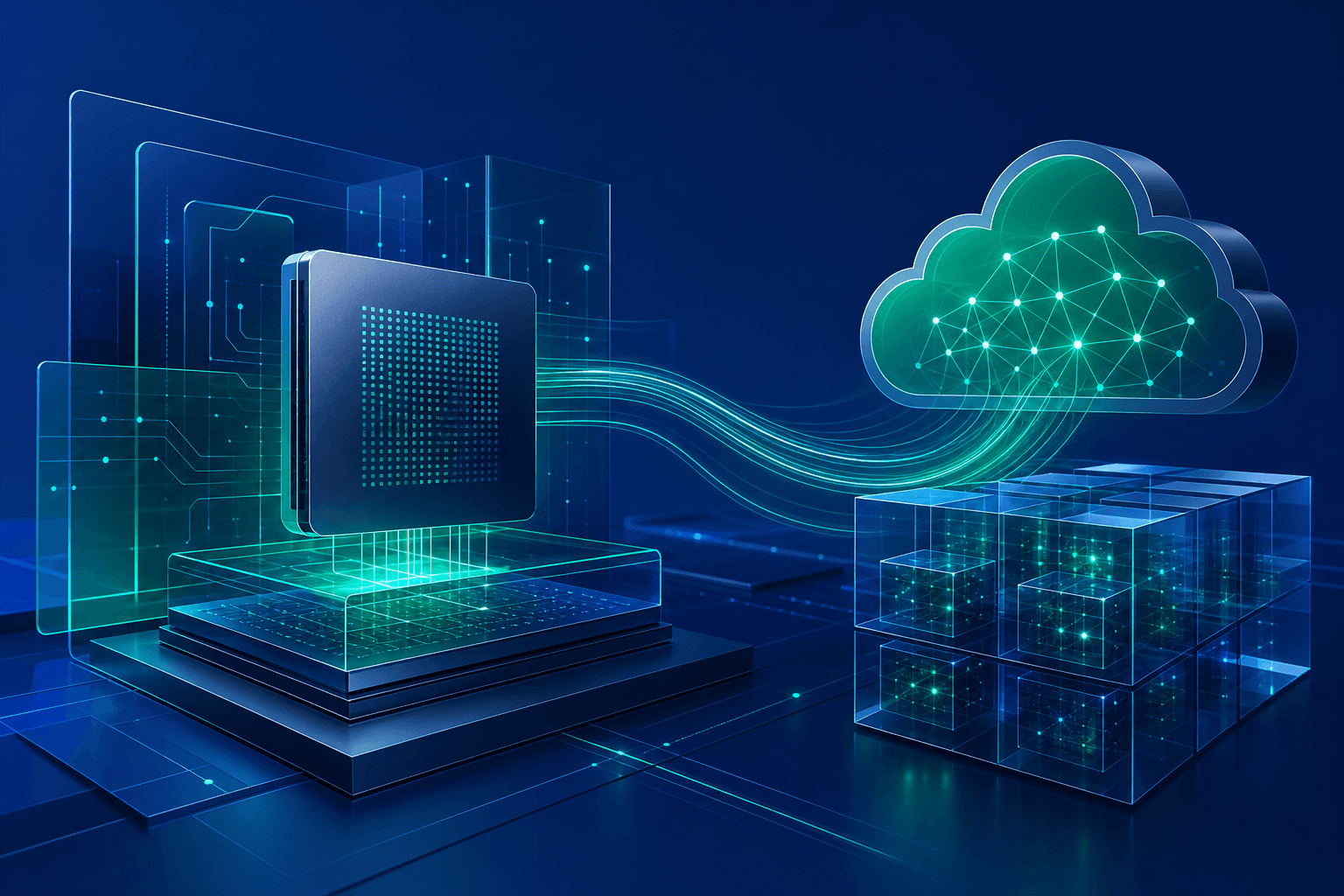
Samsung SDS officially integrated a subscription-based neural processing unit service, known as NPUaaS, into its Samsung Cloud Platform on July 20, 2026. As reported by sedaily, this infrastructure deployment leverages the second-generation Renegade (RGND) chip developed by the South Korean firm FuriosaAI to provide specialized hardware acceleration for AI inference tasks.
The Renegade architecture is engineered specifically for the deployment phase of machine learning models rather than training. By focusing on inference, the hardware aims to deliver higher power efficiency and improved cost-per-inference metrics compared to traditional general-purpose graphics processing units.
The service model allows enterprise clients to bypass the capital expenditure of purchasing physical server hardware or constructing proprietary data centers. Users can scale their compute resources by selecting configurations ranging from one to eight NPU cards based on their specific model requirements and data throughput needs.
Integration with existing cloud resources is a core feature of the platform, enabling the NPU instances to interface with high-performance storage systems and high-speed networking fabrics. This modularity is designed to support complex AI workflows, including automated document analysis, image recognition, and generative answer synthesis.
Samsung SDS has positioned the service to meet the requirements of the public sector by offering the NPUaaS within a sovereign cloud environment. This configuration ensures that organizations subject to stringent data residency and security regulations can access specialized AI hardware without compromising compliance standards.
The technical architecture of the Renegade chip offers a distinct alternative to standard GPU-based inference environments, which often suffer from underutilization or excessive power draw when running smaller, specialized models. By providing granular access to these chips, the platform enables developers to match their hardware allocation to the specific computational demands of their model architecture.
Lee Ho-jun, executive vice president and head of the Cloud Services Division at Samsung SDS, emphasized the strategic shift toward flexible hardware consumption models. He stated that the introduction of this service represents a broader effort to provide high-performance AI technology in a manner that is both operationally flexible and economically efficient for enterprise users.
The deployment of the Renegade NPU within the Samsung Cloud Platform ecosystem highlights a growing trend of cloud providers diversifying their hardware backends to optimize for specific AI workloads. By decoupling the hardware from the user’s physical infrastructure, Samsung SDS aims to lower the barrier to entry for organizations looking to deploy custom inference models at scale.
This shift toward specialized silicon in the cloud reflects an industry-wide recognition that general-purpose hardware is not always the most efficient path for production-grade inference. As organizations move beyond the experimentation phase, the demand for hardware that is purpose-built for specific inference tasks will likely continue to grow.
The integration of NPUaaS into the Samsung Cloud Platform signifies a move to address the increasing need for low-latency, high-throughput inference capabilities in data-sensitive environments. By providing a managed service, the company lowers the engineering overhead for teams that lack the resources to manage bare-metal hardware clusters.
Future developments for the platform will likely focus on expanding the integration of these NPU instances with broader MLOps pipelines. As the demand for localized inference increases, the ability to manage these resources within a secure, sovereign cloud context will remain a critical factor for enterprise adoption.
The company intends to continue diversifying its cloud-based product offerings to address the specific latency and throughput requirements of modern machine learning applications. Continued monitoring of benchmark performance and power efficiency gains from the Renegade integration will be essential for assessing the long-term impact of this hardware-as-a-service model on the enterprise cloud infrastructure sector.