OpenAI Hardware Strategy Shifts Toward Apple Silicon for Agentic Workloads
OpenAI is deploying thousands of Mac units to train reinforcement learning agents, prompting supply chain shifts and accelerating Apple’s hardware roadmap.
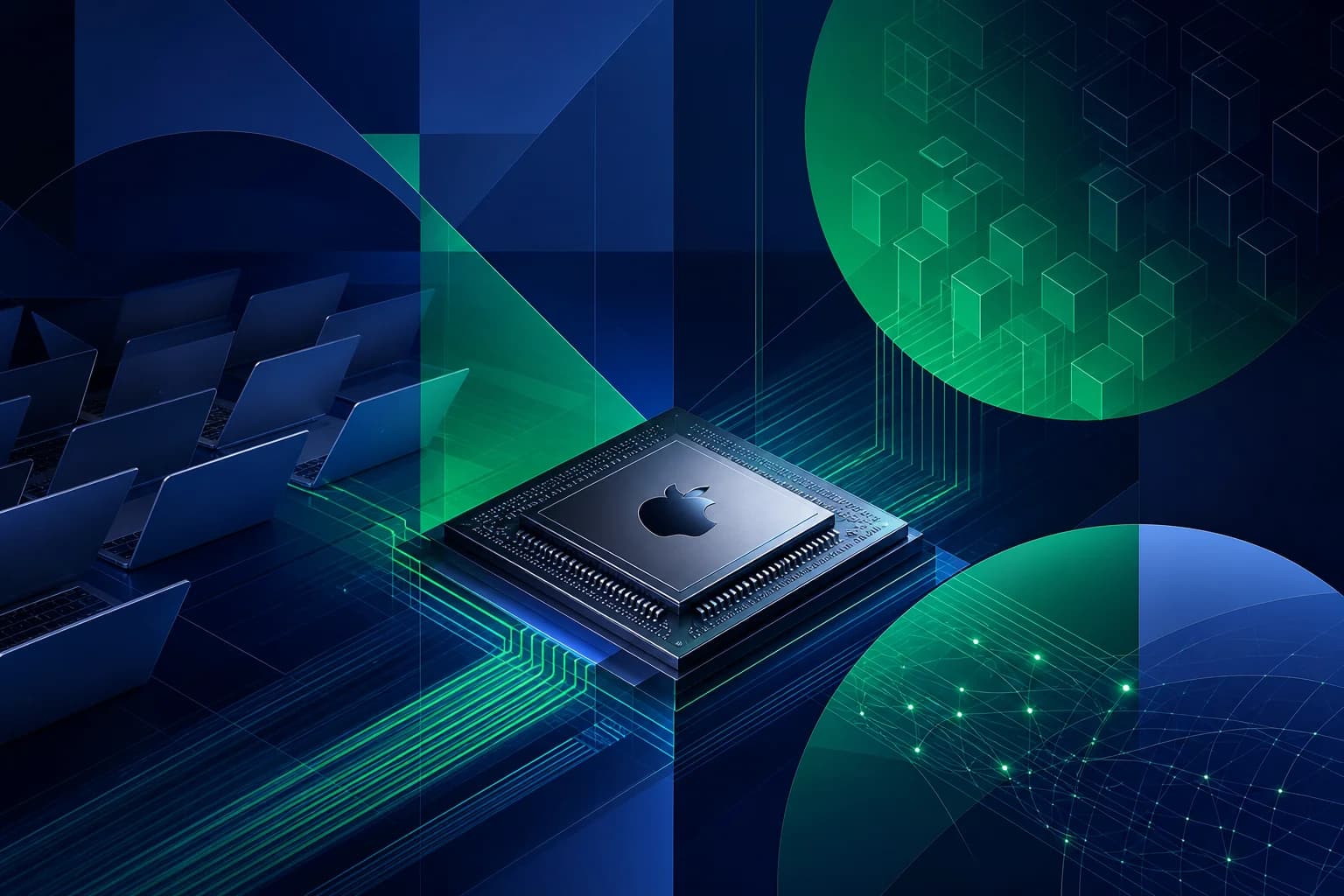
OpenAI has initiated a significant procurement strategy involving the acquisition of tens of thousands of Apple Mac mini and Mac Studio units to facilitate the development of reinforcement learning systems and autonomous computer-use agents. This hardware shift, reported by The Information on August 30, 2026, marks a departure from the organization’s traditional reliance on massive cloud-based GPU clusters for training large-scale models.
The preference for Apple hardware stems from the specific technical advantages of the company’s unified memory architecture. By allowing the CPU, GPU, and neural engine to access a shared memory pool, these desktop units provide a high-efficiency environment for the iterative, low-latency tasks required by reinforcement learning agents. This architecture enables researchers to maintain consistent performance levels while executing complex sequences of computer interactions that would be less efficient on conventional x86 desktop configurations.
Technical analysis indicates that Apple’s unified memory architecture offers superior memory bandwidth compared to traditional discrete GPU setups, which often suffer from bottlenecks when moving data between system RAM and VRAM. By integrating high-bandwidth memory directly onto the SoC, Apple Silicon minimizes latency for the small-batch, high-frequency operations common in agentic workflows. This design choice allows for more rapid state updates during reinforcement learning cycles, providing a distinct advantage for models that require constant interaction with a simulated or real-world computer environment.
While OpenAI has opted for direct ownership of this hardware, other industry players are exploring alternative deployment models. Anthropic, for instance, has reportedly secured access to identical Mac hardware through Amazon Web Services. This rental approach allows for similar workload execution without the logistical burden of managing large-scale physical server deployments or navigating supply chain constraints.
The sudden surge in demand has forced Apple to accelerate its hardware product roadmap to accommodate the needs of AI-focused enterprises. The company is reportedly pulling forward the release of refreshed Mac mini models equipped with the M6 chip and Mac Studio units featuring the M5 Ultra processor. These upcoming iterations are expected to include enhanced interconnectivity features designed to facilitate the linking of multiple machines, thereby supporting larger-scale AI workloads.
Supply chain disruptions have become an immediate consequence of this concentrated corporate buying activity. Consumers seeking high-RAM configurations for Mac mini and Mac Studio systems are experiencing significant delivery delays, with wait times for certain Mac Studio models extending from two weeks to nearly two months. These constraints reflect a broader market trend where the demand for local AI inference and training capabilities is beginning to outpace the available supply of specialized hardware components.
The broader semiconductor market is currently experiencing a parallel crunch, as evidenced by the rapid depletion of inventory for Nvidia’s RTX Spark chips. This competition for silicon highlights the intensifying race among AI labs to secure hardware capable of running models locally. The resulting pressure on memory component availability is contributing to a sustained upward trend in pricing across the personal computing sector, affecting both enterprise buyers and individual consumers.
The reliance on Apple silicon for agentic research suggests that the next phase of AI development may prioritize efficiency and local execution over the raw, centralized power of massive cloud data centers. As these agents move from theoretical research to practical computer-use applications, the demand for hardware that balances high-bandwidth memory with low power consumption will likely continue to grow. This trend forces a reevaluation of traditional MLOps infrastructure, which has historically favored GPU-heavy cloud environments over distributed desktop-class hardware.
Industry observers will be monitoring the upcoming hardware release cycles to determine if Apple can successfully scale production to meet both consumer demand and the specialized requirements of AI labs. The long-term impact on the PC market remains uncertain as companies weigh the benefits of localized AI processing against the inherent scalability of cloud-based infrastructure. Future milestones will include the official rollout of the M6-powered Mac mini and the subsequent performance benchmarks of these machines when clustered for large-scale agentic training.