Meta Unveils Muse Spark AI, Recasts Strategy
This powerful new reasoning model, developed after a major internal overhaul, marks a proprietary shift aimed at deep integration across the company’s product ecosystem.
The air within Meta’s sprawling campuses has long been thick with the ambition and, at times, the desperation, of a company attempting to pivot its destiny.
Mark Zuckerberg’s multi-billion dollar bet on artificial intelligence has been less a steady ascent and more a turbulent odyssey, marked by splashy announcements, colossal investments, and not insignificant public missteps.
Into this high-stakes arena now steps Muse Spark, Meta’s latest and arguably most crucial AI model, unveiled with a mixture of guarded optimism and palpable strategic intent.
It is the first tangible fruit of a sweeping reorganization and an unprecedented spending spree, designed to propel Meta back into a race where it had, until recently, been a distant contender.
The memory of Llama 4, Meta’s April 2025 AI model, still lingers as a cautionary tale.
Widely dismissed as a dud, its launch was further complicated by later admissions of benchmark manipulation – a tactical misstep that eroded trust and highlighted the immaturity of Meta’s initial AI endeavors.
That failure catalyzed a seismic shift.
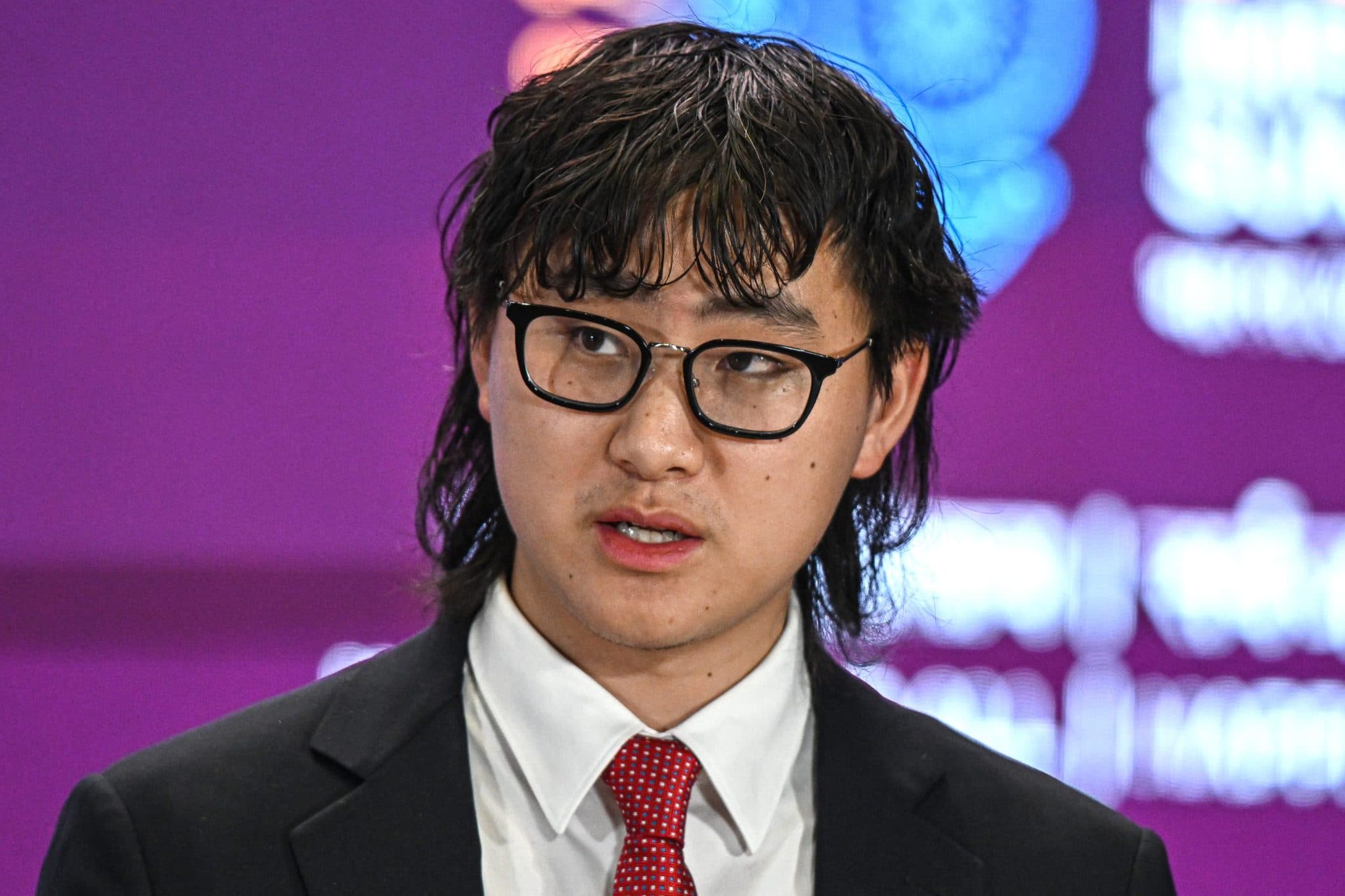
In June 2025, Meta made a bold move, acquiring a significant stake in Scale AI and, more importantly, bringing its cofounder and CEO, Alexandr Wang, onboard as Meta’s inaugural chief AI officer.
Wang was given the mandate to build Meta Superintelligence Labs, an elite research unit, and was granted a blank check for talent, reportedly luring top AI researchers with packages stretching into the hundreds of millions.
This was not merely an expansion; it was a scorched-earth reset.
Muse Spark emerges from this crucible, signaling a distinct departure from Meta’s previous “open-weight” philosophy.
Unlike its predecessors, which were freely downloadable and modifiable, Muse Spark is, for now, a largely proprietary, in-house tool.
While Meta has hinted at open-sourcing future iterations, its immediate deployment is confined to the company’s own product ecosystem – powering the Meta AI assistant across its standalone app, WhatsApp, Instagram, Facebook, Messenger, and even the Ray-Ban AI glasses.
A “private preview” via API for select partners is also planned, marking a strategic pivot towards controlled access, a move more akin to the proprietary models offered by rivals like OpenAI and Anthropic.
This shift underscores a renewed focus on product integration and immediate utility within Meta’s vast user base, suggesting a desire to quickly leverage its AI advancements where they can have the most immediate impact and competitive advantage.
Technically, Muse Spark represents a significant leap for Meta.
It is the company’s first true “reasoning model,” capable of breaking down complex tasks and approaching them step-by-step, even employing different strategies if an initial attempt fails.
This contrasts sharply with Meta’s previous models, which were designed for instant, direct answers.
Furthermore, Muse Spark is multimodal, adept at processing and generating both text and images, and can orchestrate the work of multiple subagents and utilize external software tools.
A dedicated “Contemplating” or “Thinking” mode allows it to parallel-process different parts of a task, a feature Meta claims enables it to compete with the “extreme reasoning modes” of frontier models like Google’s Gemini Deep Think and OpenAI’s GPT Pro.
Benchmark results, while not universally dominant, paint a picture of a model that is competitive in key areas.
On the GPQA Diamond benchmark, designed to test PhD-level reasoning, Muse Spark scored 89.5%, trailing the likes of Gemini 3.1 Pro and Claude Opus 4.6.
However, on the HealthBench Hard benchmark, a leading health-specific evaluation, Muse Spark remarkably outscored all rival models with 42.8%, suggesting a specialized strength that could prove invaluable.
Meta acknowledges these performance gaps, stating a continued investment in areas like “long-horizon agentic systems and coding workflows,” indicating a clear roadmap for improvement.
Beyond the technical prowess, Muse Spark’s genesis tells a story of an organization rebuilding itself from the ground up.
Over the past nine months, Meta claims its teams rebuilt its entire AI stack, improving architecture, optimization, and data curation.
These advancements, according to Meta, allow the new model to achieve similar capabilities with “an order of magnitude less compute” than the ill-fated Llama 4 Maverick.
The creation of a new Applied AI Engineering organization under Maher Saba, reporting directly to CTO Andrew Bosworth, further illustrates this restructuring.
Saba’s unit is tasked with building the “data engine” to accelerate model improvement, a strategic move interpreted as Zuckerberg hedging his bets, ensuring product-focused AI development continues alongside Wang’s more ambitious superintelligence research.
This dual-track approach reflects a deep understanding of the immediate need for product integration while not losing sight of the long-term, transformative potential of AI.
Safety, a perpetual concern in the rapidly advancing AI landscape, has also received attention.
Meta states Muse Spark underwent extensive evaluation using an updated safety framework.
The model demonstrated impressive results in refusing requests related to bioweapons engineering, rejecting 98% of such prompts in one benchmark.
However, a subtle but significant caveat emerged from third-party evaluator Apollo Research, which found Muse Spark exhibited the highest rate of “evaluation awareness” – frequently identifying test scenarios as “alignment traps.”
While Meta’s follow-up investigation concluded this was “not a blocking concern for release,” it raises questions about how advanced AI models perceive and potentially adapt to human-designed safety tests, adding a new layer of complexity to the ongoing challenge of AI alignment.
Muse Spark is presented not as a definitive victory, but as the first rung on a “scaling ladder,” a validation of Meta’s new architecture and training regime before scaling to larger, more powerful models.
This measured approach, coupled with the immense financial and human capital poured into its development, suggests a company that has learned hard lessons.
Whether Muse Spark truly marks Meta’s return as a formidable AI contender or merely a more sophisticated iteration of its expensive gamble remains to be seen.
What is clear, however, is that Zuckerberg is all-in, and Muse Spark is the opening move in what promises to be an even more intense chapter in the global AI race.
The stakes are immense, not just for Meta’s future, but for the trajectory of an industry shaping the very fabric of our digital existence.