HyperVault Commits INR 70,000 Crore to 1GW AI Infrastructure Hub in Hyderabad
The TCS subsidiary is developing a massive 264-acre campus designed to support high-density GPU clusters and large-scale generative AI workloads.
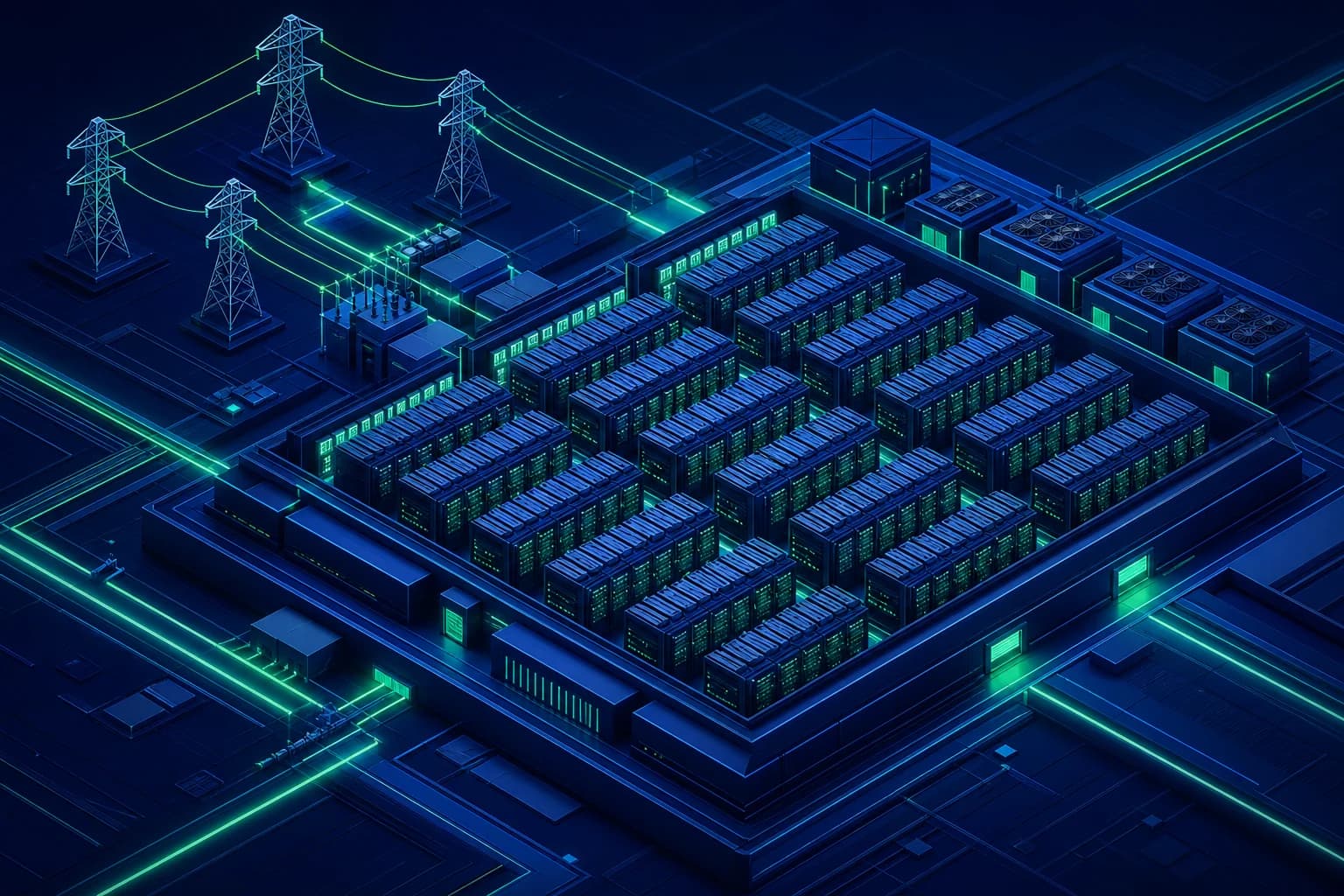
HyperVault, a subsidiary of Tata Consultancy Services, has finalized plans to develop a 1 gigawatt artificial intelligence data centre campus in Hyderabad, Telangana. The project represents a capital commitment of INR 70,000 crore, aimed at establishing a specialized facility capable of hosting the high-density GPU deployments required for modern machine learning training and inference.
The development will occupy a 264-acre site, structured in phases to accommodate the rapid scaling of computational infrastructure. Engineers designed the facility to address the thermal and power requirements inherent in large-scale cluster architectures. This infrastructure is intended to support the intensive workloads associated with generative models and other high-compute AI applications.
K Krithivasan, Chief Executive Officer of Tata Consultancy Services, stated that the Hyderabad location was selected for its operational capacity and technical talent pool. The site provides the necessary ecosystem to support international clients with complex, resource-heavy computational needs. This investment reflects a broader strategic shift within the company to prioritize specialized technology services over traditional IT outsourcing.
The facility is engineered to meet the specific power density demands of modern GPU clusters, which often exceed the capabilities of standard enterprise data centres. Advanced liquid cooling systems and high-efficiency heat exchangers are a primary focus of the site design to ensure operational efficiency during continuous high-load processing. These technical specifications are essential for maintaining the uptime required by hyperscalers and large-scale AI enterprises.
Beyond cooling, the campus architecture incorporates redundant power distribution units to manage the massive electrical loads required by thousands of interconnected GPUs. The design team has prioritized modular power delivery, allowing for the incremental scaling of compute nodes without disrupting existing operations. This approach ensures that the facility can adapt to the evolving power profiles of next-generation hardware.
The project arrives as the parent organization continues to diversify its operational portfolio through targeted acquisitions. The company recently reached an agreement to acquire the automotive consulting unit MHP from Porsche AG, further expanding its reach into specialized industrial sectors. These moves suggest a deliberate effort to integrate high-value engineering services with sophisticated, scalable physical infrastructure.
Market observers note that the scale of this 1GW facility positions it as a critical node in the global AI supply chain. The ability to provide dedicated, high-density compute power is becoming a primary differentiator for technology service providers. By securing significant land and power capacity, the firm is attempting to capture a larger share of the enterprise market for AI-driven infrastructure.
The shift toward dedicated AI infrastructure highlights the increasing reliance on specialized hardware for large-scale model development. As computational requirements continue to climb, the availability of high-density data centres becomes a bottleneck for many organizations. This facility aims to mitigate those constraints by providing a purpose-built environment for high-performance computing.
The success of this campus will depend on the integration of reliable power grids and the deployment of efficient cooling architectures at scale. Analysts are monitoring the phased rollout to determine how effectively the site can attract international hyperscalers seeking regional compute capacity. The project serves as a barometer for the broader regional capacity to support advanced technological infrastructure.
Future milestones for the project include the completion of initial power grid connections and the commencement of the first phase of GPU cluster installations. Stakeholders will be watching for updates on the facility’s power usage effectiveness metrics and its ability to meet the stringent latency requirements of global AI clients. The development remains a significant indicator of the ongoing shift toward localized, high-capacity AI processing hubs.